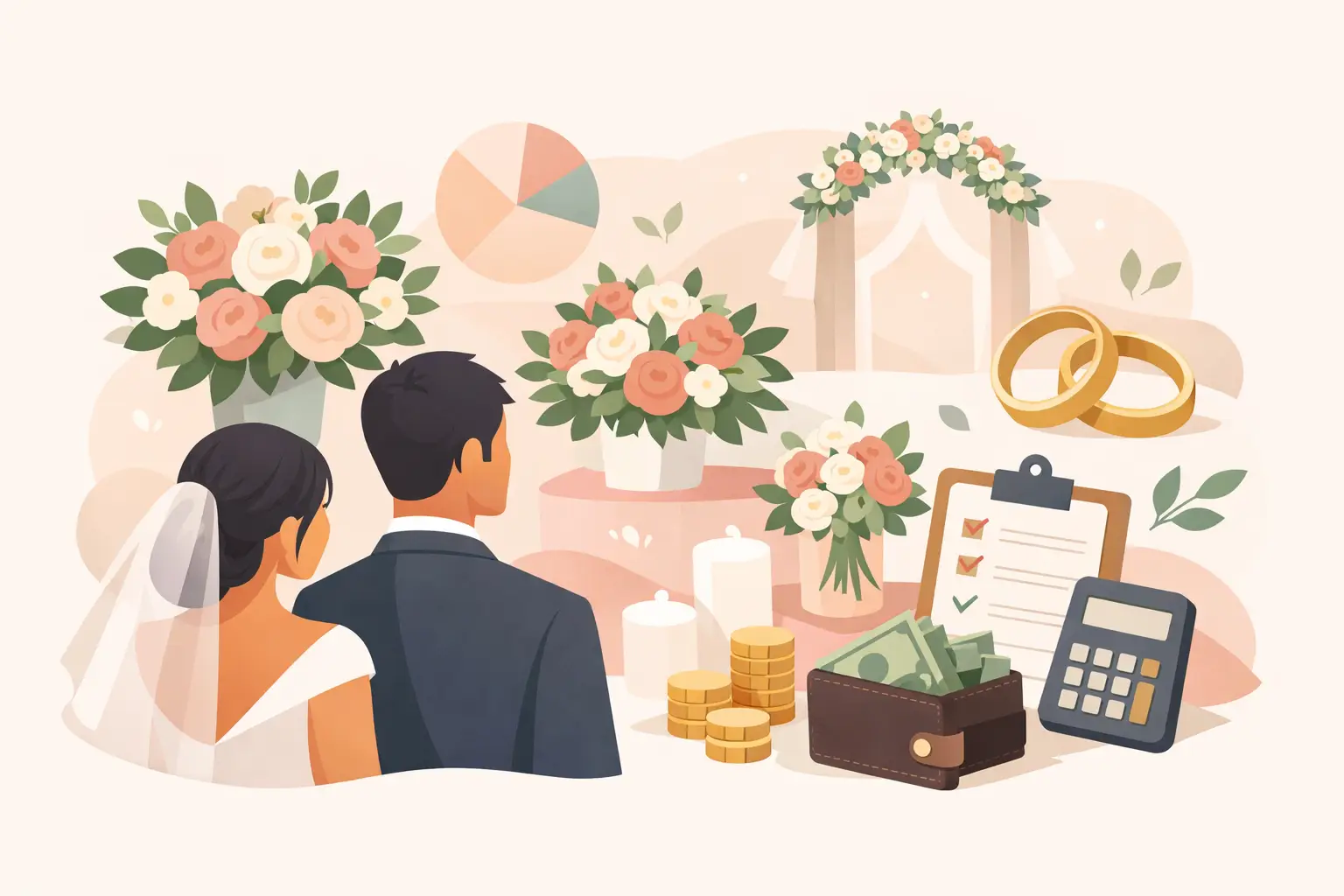
The moment most couples begin a wedding flower budget guide, they usually ask the same question in different ways: how much should flowers cost, and where is that money actually going? It is a fair question. Wedding flowers can look effortless on the day, yet behind that softness and natural movement sits careful sourcing, conditioning, design time, transport, set-up and, often, early starts in the busiest week of your wedding season.
A sensible flower budget is not about stripping everything back until it feels mean. It is about understanding what matters most to you, where flowers have the biggest visual and emotional impact, and how seasonality shapes both style and cost. If you are planning a wedding in Derbyshire and want flowers that feel personal rather than generic, that clarity will help you spend well.
A wedding flower budget guide begins with priorities
Before anyone talks about stems, colours or varieties, it helps to decide what role flowers are playing in your wedding. For some couples, the bouquet and ceremony arrangements are central to the atmosphere of the day. For others, flowers are there to quietly support a beautiful setting without taking over the budget.
That distinction matters, because floral spend is rarely just about quantity. A smaller number of beautifully made, well-placed designs can feel far more considered than flowers scattered thinly across every surface. If your budget is modest, it is often wiser to choose a few key moments and do them properly.
Usually, those key moments are personal flowers, the ceremony backdrop or front area, and guest tables. Personal flowers include the bridal bouquet, buttonholes and perhaps flowers for bridesmaids or close family. These are the pieces that appear in photographs all day and carry real sentimental weight. Ceremony flowers set the tone, especially in a church, barn or village hall where the setting benefits from softness and scale. Table flowers are often where costs can rise quickly, simply because they need to be repeated.
What wedding flowers usually cost
There is no single fixed price for wedding flowers, because every brief is different. A bouquet made with delicate, seasonal British flowers in late spring will be priced differently from one that relies on imported blooms out of season. A simple buttonhole is not the same as a large foam-free installation that needs building on site.
As a broad guide, couples often spend anywhere from a few hundred pounds for very minimal wedding flowers to several thousand for fuller floral styling across bouquets, ceremony designs and reception pieces. Most bespoke weddings sit somewhere in the middle, depending on scale, flower choices and logistics.
What you are paying for includes far more than the flowers themselves. There is the consultation and planning, the ordering process, the risk management around perishable materials, the hours spent conditioning every stem, the design work, the mechanics that hold arrangements safely in place, delivery, set-up and often collection. If arrangements are being repurposed from ceremony to reception, that movement takes time and care too.
This is why comparing wedding floristry to buying a hand-tied bouquet can be misleading. They are very different services.
Where your budget stretches furthest
If you want your flower budget to work hard, think first about visibility. Where will guests gather? What will appear in your photographs? Which spaces feel plain without flowers, and which already have character?
A lovely example is a ceremony arrangement that can be moved afterwards to the top table or entrance area. Meadow-style designs, urn arrangements and statement pieces placed at the end of the aisle can often do more than one job if planned well. This is one of the simplest ways to make a budget feel more generous without increasing the spend.
Bridal bouquets are also usually worth prioritising. They are held closely, photographed repeatedly and remembered long after the table arrangements have been cleared away. The same is true of a small number of well-made buttonholes rather than a long list for every possible guest.
Reception tables need a little more thought. If you have ten or twelve tables, even modest centrepieces add up quickly. Sometimes bud vases, clustered bottles or a few well-balanced arrangements alongside candles give a more relaxed and elegant feel than identical large designs everywhere. It depends on the style of your venue and how much impact you want in the room.
The biggest factors that affect price
Seasonality is one of the clearest influences on cost. British-grown flowers at their natural best are not only more sustainable, they often give you better character, movement and freshness. In spring and summer, there is a wonderful range to work with. In winter, the palette narrows and certain looks can require more imported material, which changes the pricing.
Flower choice matters too. Some flowers are naturally more expensive because they are fragile, slow to grow or hard to source in quantity. Others give generous volume for less. If you are open about the mood you want rather than insisting on one exact stem, your florist can often guide you towards flowers that give a similar feel at a better value.
Scale is another obvious factor, but not always in the way couples expect. A loose, natural design still needs a good quantity of flowers to look abundant and balanced. “Wild and effortless” is often quite labour-intensive to create well.
Then there is logistics. A wedding with straightforward delivery to one venue is simpler than a day involving multiple locations, access restrictions, narrow set-up windows or large installations needing work on ladders and frames. Those practical details shape the quote just as much as the flowers themselves.
How to set a realistic budget from the start
The easiest way to keep flower costs manageable is to speak about your overall budget honestly from the outset. Many couples worry that naming a figure will limit creativity, but in practice it usually does the opposite. It helps your florist design within real parameters rather than sketching out ideas that will later need to be cut back.
If you have a firm maximum, say so. If you have some flexibility for the right idea, say that too. A good florist will explain what is achievable and where you might want to adjust expectations. Sometimes the answer is to reduce the number of pieces. Sometimes it is to lean more heavily into seasonal ingredients. Sometimes it is to shift spending from repeated table flowers into one beautiful ceremony statement.
It also helps to avoid building your plans around social media images without context. A photograph of a floral arch may not tell you how many stems were used, how many people installed it, whether it was foam-free, or whether the image came from a styled shoot with a separate production budget. Inspiration is helpful, but it should be translated into something suitable for your venue, your season and your spend.
A practical wedding flower budget guide for couples who value seasonality
If your taste leans towards natural, garden-inspired flowers, seasonality can become one of your strongest budgeting tools. Choosing flowers that are at their best when you marry often produces arrangements that feel more at ease with the day itself. They sit better in the landscape, they tend to have more personality, and they do not need to be forced into an out-of-season brief.
This does mean letting go of the idea that your wedding must contain one exact flower seen on Pinterest three years ago. In return, you usually get something more beautiful and more individual. A florist who works closely with the seasons can build a palette around colour, texture and movement rather than chasing a rigid shopping list.
That approach is especially helpful for couples who want flowers to feel quietly elegant rather than over-styled. British flowers often have a softness and natural line that suits this beautifully.
Where to save and where not to
There are sensible ways to reduce costs, and then there are cuts that tend to leave the flowers feeling underpowered.
Saving well often means trimming quantities, repurposing designs and keeping the brief focused. Choosing fewer bridesmaids bouquets, limiting buttonholes to immediate wedding party, or using candles and vessels to support smaller table flowers can all work well. So can trusting your florist on seasonal substitutions.
Where couples often regret economising is in trying to spread too little budget across too many floral moments. A tiny arrangement on every surface can make the whole scheme feel hesitant. It is usually better to let some areas breathe and invest in the places that matter.
It is also worth being cautious about DIY for anything beyond very simple details. Wedding flowers are time-sensitive and physically demanding. Buckets of flowers arriving two days before the wedding can sound charming in theory and deeply stressful in reality, especially if family members are already managing timings, clothing and guests. For personal flowers and larger designs in particular, professional making makes a noticeable difference.
Working with a florist makes the budget clearer
Good floristry is partly design and partly translation. Many couples know how they want their wedding to feel, but not what that feeling costs in floral terms. That is where one-to-one guidance becomes valuable.
A thoughtful florist will help you see which ideas are realistic, which can be adapted, and which are likely to absorb too much of the budget for too little return. The aim is not to push you towards more spend. It is to create something that feels right for your day, your values and your setting.
For couples in Derbyshire planning a wedding with seasonal character, that often means letting the landscape, the venue and the time of year lead the conversation a little. The result is usually calmer, more personal and far more memorable than a formula.
A good flower budget should leave you feeling reassured, not deprived. When you understand where the money goes and what truly matters to you, it becomes much easier to choose flowers with confidence and enjoy them fully when the day arrives.
 I’m Marie,
the florist behind Sweet Pea Macfie.
I began Sweet Pea Macfie in 2018 and am a qualified florist with over 13 years’ experience.
The name is an ode to my Grandad, John Macfie, who in his day was one of the best Sweet pea growers in the country. He exhibited at all the major flower shows, and his Chelsea Gold Medal is one of my most treasured possessions, so you could say that growing and arranging flowers is in my blood.
I’m Marie,
the florist behind Sweet Pea Macfie.
I began Sweet Pea Macfie in 2018 and am a qualified florist with over 13 years’ experience.
The name is an ode to my Grandad, John Macfie, who in his day was one of the best Sweet pea growers in the country. He exhibited at all the major flower shows, and his Chelsea Gold Medal is one of my most treasured possessions, so you could say that growing and arranging flowers is in my blood.