The loveliest wedding flowers rarely begin with a list of stems. They begin with the feeling you want to create as you walk into the room, hold your bouquet, or sit down among the people you love. For couples seeking wedding flowers Chesterfield and across Derbyshire, a seasonal approach brings that feeling into focus: flowers with character, gathered in colours and textures that belong to the time of year.
A wedding does not need flowers in every corner to feel considered. Often, a beautifully made bridal bouquet, thoughtful buttonholes and an abundant ceremony arrangement can set the whole tone. The key is choosing flowers that work with your setting, your season and the way you want the day to feel.
Why seasonal wedding flowers feel more personal
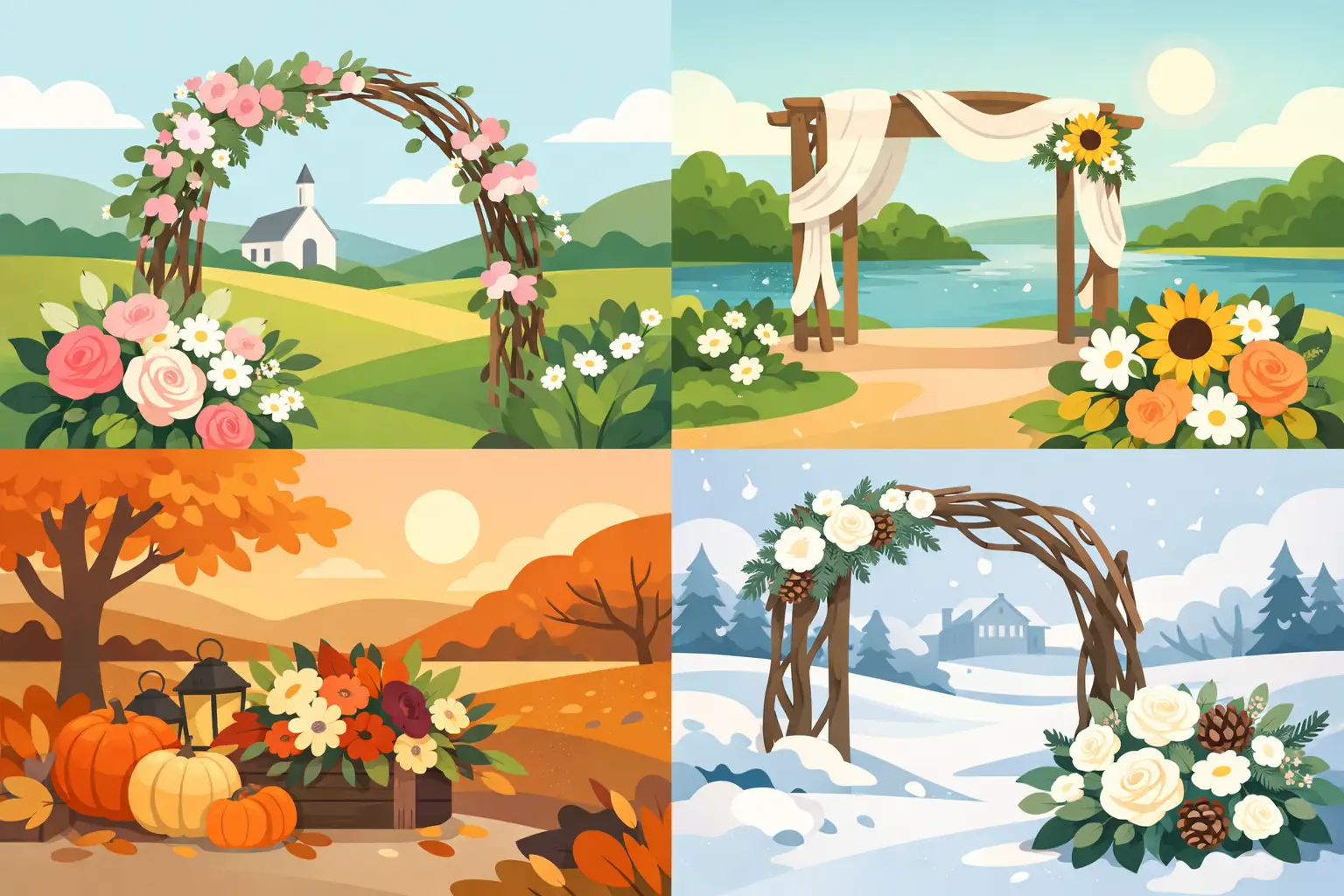
Seasonality is not simply a practical consideration. It gives wedding flowers a sense of place and occasion. Spring brings the looseness of blossom, fritillaries, narcissus and sweetly scented stocks. Summer offers garden roses, sweet peas, cosmos and fragrant herbs. By autumn, dahlias, chrysanthemums, seed heads and richly toned foliage create depth without heaviness. Winter flowers can be wonderfully atmospheric too, with hellebores, early narcissi, evergreen foliage and sculptural branches.
Choosing what is naturally available gives a florist room to create rather than merely replicate a picture. A bouquet made from British-grown flowers will have its own gentle variations in tone, shape and movement. That is part of its beauty. It feels alive, rather than uniform.
This does not mean every flower must be grown locally, nor that a particular favourite is automatically out of reach. Some varieties travel well and have a place in a considered design. But starting with the season usually offers better quality, more interesting ingredients and a more natural result. It can also reduce reliance on imported flowers and the intensive packaging that often accompanies them.
Wedding flowers in Chesterfield: start with the setting
Chesterfield and the surrounding Derbyshire countryside offer an appealing mix of country houses, village churches, converted barns, garden spaces and characterful town venues. Each asks for something slightly different.
A ceremony in a stone church may suit arrangements that soften the architecture without competing with it: meadow-like urns, generous foliage and flowers with a little movement. For a barn celebration, a single long table filled with seasonal arrangements can be more effective than lots of small, identical pieces. In a light-filled venue, translucent flowers such as cosmos, scabious and sweet peas can look especially beautiful, while a darker room may benefit from richer foliage and more concentrated colour.
Bring photographs of your venue to your florist, but also describe the atmosphere. Is the day relaxed and informal, quietly elegant, colourful and joyful, or intimate and pared back? Those words are often more useful than a folder of images. They help shape the scale, palette and style of the flowers from the outset.
Think about what guests will notice
Flowers are most effective where they meet people. The bridal bouquet will appear in photographs throughout the day, while buttonholes offer a small but meaningful detail for close family and the wedding party. Ceremony flowers frame the promises you make, and table flowers create the environment in which guests spend the longest part of the celebration.
If your budget is limited, concentrating your spend in these places is usually wiser than scattering small arrangements throughout a venue. A pair of ceremony arrangements can often be moved to the reception afterwards, perhaps placed either side of the top table or at the entrance. This allows one set of flowers to work harder without feeling compromised.
Finding your own floral style
There is no need to know the names of flowers before a consultation. It is far more helpful to share what you are drawn to: a favourite garden, an old painting, a fabric, the colour of the bridesmaids’ dresses or the landscape around your venue. Perhaps you dislike anything too neat, or perhaps you want flowers that feel classic but never stiff. These are useful instincts.
Natural wedding flowers are often described as wild, but good floral design is carefully composed. Stems are chosen for their line, proportion and texture. A loose bouquet still needs balance. A table arrangement should allow conversation across it. A floral meadow should look effortless while remaining stable and appropriate to the space.
At Sweetpea Macfie, the starting point is a conversation rather than a set package. This makes space for practical guidance as well as creative ideas, particularly for couples who know what they like but are unsure how to translate it into flowers.
A realistic approach to budget and priorities
Flower costs vary with season, scale, stem availability and the mechanics needed to create each design. Large installations, floral arches and arrangements designed for tall spaces require more than flowers alone: they involve time, structures, transport, conditioning and careful installation.
Rather than beginning with a fixed image of a dramatic floral installation, decide where flowers will have the greatest emotional and visual impact. A useful early conversation covers your guest numbers, venue, ceremony and reception plans, colour direction, wedding party, and any arrangements you hope to repurpose.
It is also worth being open to alternatives. If peonies are central to your vision but your wedding is in late summer, a florist can suggest garden roses, dahlias or other flowers that offer a similar softness and generosity. The result will be more convincing than forcing a design around flowers that are unavailable or poor quality at that time of year.
A clear budget is not an awkward detail. It gives your florist the information needed to propose the best use of it. Thoughtful design is often about editing: fewer elements, chosen well, can feel much more luxurious than a long list of small additions.
Choosing sustainable wedding flowers
Sustainability in wedding floristry is made up of many small decisions. British-grown, seasonal flowers can reduce flower miles and support local growers. Reusing ceremony arrangements at the reception helps avoid unnecessary duplication. Minimal packaging and avoiding floral foam where possible can reduce waste too.
Foam-free floristry requires different techniques, and not every design has the same practical requirements. For some large-scale or challenging installations, the right mechanics must be considered carefully. The aim is not perfection for its own sake, but choosing the most responsible method that still keeps flowers safe, hydrated and beautiful throughout the day.
You might also consider what happens after the celebration. Smaller arrangements can go home with guests, while flowers suitable for drying can become a keepsake. These choices do not need to be elaborate. They simply extend the pleasure of the flowers beyond one afternoon.
When to begin planning your wedding flowers
For weddings in popular months, it is sensible to speak with a florist once your date and venue are confirmed. This is particularly useful if you are planning larger arrangements, an installation, or a wedding during a busy summer weekend. Early planning allows time to understand the venue, discuss the season and reserve the date.
The details do not need to be final at that stage. Guest numbers, table plans and even dress choices can change. A good floral plan has room to develop, while retaining a clear design direction. Around six to eight weeks before the wedding, most couples are ready to confirm the final quantities and practical arrangements.
On the day itself, flowers should feel like a natural part of the celebration, not another thing to manage. Your florist should have a clear plan for delivery, installation and collection where needed, leaving you free to enjoy the room as it comes to life.
The right flowers will not make your wedding feel like somebody else’s carefully saved image. They will reflect your season, your setting and the people gathering with you. Begin with what matters most, trust the changing beauty of the season, and let the flowers tell a small, honest part of your story.
 I’m Marie,
the florist behind Sweet Pea Macfie.
I began Sweet Pea Macfie in 2018 and am a qualified florist with over 13 years’ experience.
The name is an ode to my Grandad, John Macfie, who in his day was one of the best Sweet pea growers in the country. He exhibited at all the major flower shows, and his Chelsea Gold Medal is one of my most treasured possessions, so you could say that growing and arranging flowers is in my blood.
I’m Marie,
the florist behind Sweet Pea Macfie.
I began Sweet Pea Macfie in 2018 and am a qualified florist with over 13 years’ experience.
The name is an ode to my Grandad, John Macfie, who in his day was one of the best Sweet pea growers in the country. He exhibited at all the major flower shows, and his Chelsea Gold Medal is one of my most treasured possessions, so you could say that growing and arranging flowers is in my blood.