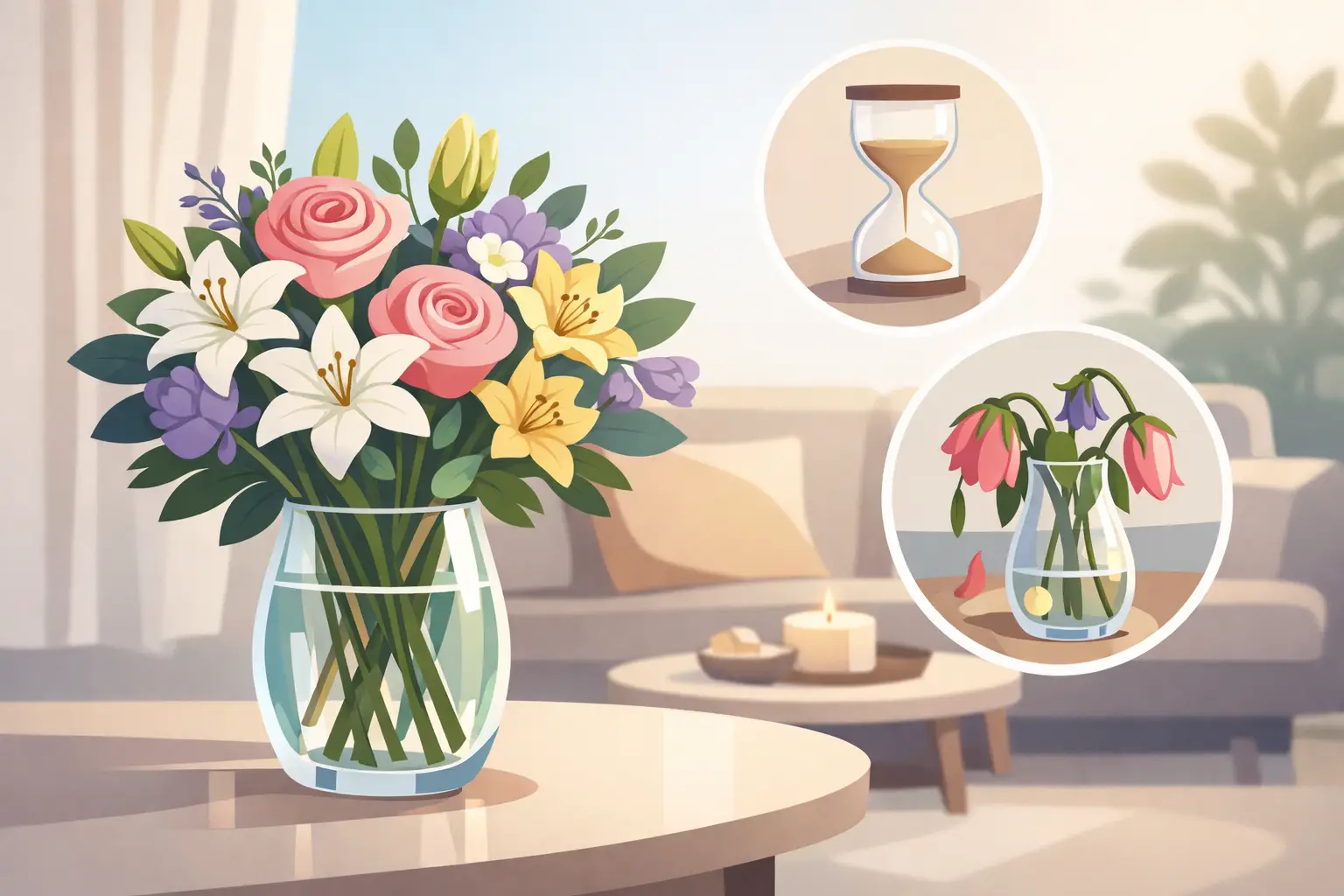
A bouquet can look glorious on the kitchen table on day one, then feel rather disappointing if it has faded by the weekend. When clients ask what flowers last longest in bouquets, the answer is partly about choosing dependable varieties, but it is also about freshness, seasonality and the care those stems receive once they are home.
A long-lasting bouquet need not be stiff or overly formal. The most beautiful arrangements often combine flowers at different stages of opening, with foliage, texture and movement giving the design a natural feel as it changes. The aim is not for every bloom to behave identically, but for the bouquet to remain lovely and interesting for as long as possible.
What flowers last longest in bouquets?
Some flowers are naturally generous in a vase. They have strong stems, sturdy petals or a slower opening cycle, and can often look good for ten days or more when properly conditioned and cared for. Others are more fleeting, which does not make them any less beautiful – just better suited to a particular moment or season.
Chrysanthemums
Chrysanthemums are among the most reliable cut flowers, often lasting two to three weeks in a clean vase. Modern varieties can be wonderfully elegant rather than the dense, formal flowers some people remember. Spray chrysanthemums bring several smaller blooms to each stem, while single varieties offer a softer, more meadow-like note.
They are especially useful in bouquets intended to last through a celebration, a period of condolence or simply a long stretch at home. Their longevity also makes them a sensible supporting flower alongside more delicate seasonal stems.
Alstroemeria
Alstroemeria, sometimes called Peruvian lily, is a remarkably good value choice because each stem carries several buds. As the first flowers fade, new ones continue to open. Given fresh water and a trim, a vase life of around ten to fourteen days is common.
Its markings and branching shape can feel quite lively in a hand-tied bouquet. It is less fragrant than true lilies and usually more understated, which makes it easy to pair with roses, foliage and textured flowers.
Carnations and dianthus
Carnations have been unfairly dismissed in the past, largely because they were used so routinely. In the right hands, though, they are beautifully ruffled, scented and full of character. Garden-style carnations and dianthus can bring a soft, romantic quality to an arrangement, while lasting comfortably for ten days or longer.
They are a particularly helpful choice when you would like a bouquet with a gentle, gathered feel that will not disappear within a few days. Their range of muted pinks, apricots, creams and berry tones also works beautifully with a natural British garden palette.
Lisianthus
Lisianthus has delicate, rose-like petals but is far hardier than it appears. A stem may carry open flowers alongside tightly closed buds, allowing the bouquet to develop gradually in the vase. Expect around seven to fourteen days, depending on how far open the flowers were when arranged.
It is a florist’s favourite for weddings and thoughtful gifts because it looks soft without being fragile. White, blush, mauve and dusky tones sit especially well in relaxed, elegant designs.
Roses, with a little care in the choosing
Roses can last anywhere from five to ten days, occasionally longer, but variety and freshness make a real difference. A rose that has travelled extensively, been stored for a long time or arrived fully open may have a shorter life than a fresher, tighter bud.
Garden roses are chosen for their perfume, petal count and generous opening, rather than exceptional vase life. They are worth including when their scent and romance matter most, but they benefit from being balanced with longer-lasting flowers. For a gift bouquet, a few beautiful roses among hardy supporting stems often give the best of both worlds.
Orchids, anthuriums and tropical accents
For exceptional staying power, orchids and anthuriums are hard to beat. Individual orchid blooms can look pristine for two weeks or more, and anthuriums may last even longer. Their glossy surfaces and sculptural form are not right for every style, but used sparingly they bring a calm, contemporary contrast to softer flowers.
These are often less seasonally local than British garden flowers, so they are a considered choice rather than an automatic one. If provenance is a priority, it can be preferable to choose a fully seasonal, British-grown bouquet and enjoy its shorter but more connected moment in the year.
Long-lasting does not always mean the same thing
There is a difference between a flower that remains physically intact and one that still looks beautiful in a natural bouquet. Hydrangeas, for instance, can last well when fresh and carefully conditioned, but they are thirsty flowers and may wilt quickly if their water runs low. Sweet peas are exquisitely scented and completely synonymous with early summer, yet they are deliberately brief-lived.
Tulips also continue to grow and bend in the vase. Some people adore that graceful movement; others expect a more upright, controlled display. Neither response is wrong. Good floristry is about understanding what matters to the recipient: fragrance, a particular season, a favourite flower, local provenance or the reassurance that the bouquet will look good for a fortnight.
For wedding flowers, longevity has another meaning. The flowers must look their best through photography, the ceremony, hugs, travel and the celebration afterwards. A bridal bouquet may include more delicate focal flowers because it is designed for one important day, while reception arrangements can lean on hardier stems to remain fresh long after guests have gone home.
Fresh, seasonal flowers often outlast expectations
The condition of a stem at the point of arranging matters as much as its variety. Flowers that have been cut at the right stage, transported carefully and properly conditioned can outlast flowers with a supposedly longer vase life that have spent days in transit.
British-grown seasonal flowers can be especially rewarding in this respect. They have often travelled fewer miles and can arrive with the freshness, scent and individuality that are difficult to replicate. The trade-off is that availability changes with the weather and the growing season. Rather than promising the exact same bouquet all year, a thoughtful florist will work with what is at its best now.
At Sweetpea Macfie, that season-led approach means selecting flowers for their beauty, character and suitability to the occasion – not merely because they are available on a wholesale list. Sometimes that will mean richly scented narcissi in spring or delicate cosmos in late summer, even though a hardier bloom would last longer. A bouquet should feel alive to the season it belongs to.
How to make any bouquet last longer
Once flowers leave the florist, a few quiet habits make a considerable difference. Start with a genuinely clean vase. Traces of old water and bacteria can shorten the life of even the strongest stems.
Cut one to two centimetres from the stems at an angle using clean, sharp scissors or secateurs, then place them straight into fresh water. Remove any leaves that would sit below the waterline, as submerged foliage quickly encourages bacteria.
Change the water every two or three days, and give the stems another small trim at the same time. Keep the arrangement away from direct sunshine, radiators, fireplaces and fruit bowls. Ripening fruit releases ethylene gas, which can hasten ageing in flowers.
If your bouquet includes mixed stems, be prepared to remove individual flowers as they fade. This is not a failure of the arrangement. It allows the remaining buds and longer-lasting flowers to continue looking their best, and the bouquet may become more open and relaxed as the days pass.
Choosing the right bouquet for the moment
If you are sending flowers to someone who is unwell, newly bereaved or simply unlikely to have much time for flower care, it is kind to choose a design with reliable stems such as chrysanthemums, alstroemeria, carnations and lisianthus. A smaller, well-considered bouquet with a good vase life can feel more useful than an extravagant arrangement that fades quickly.
For a birthday, anniversary or thank-you, it may be worth choosing more expressive flowers alongside those dependable varieties. A few scented sweet peas, a flutter of cosmos or a generous garden rose can make the gift feel personal, even if those stems are only at their loveliest for several days.
The best bouquet is rarely the one that lasts longest on paper. It is the one that arrives fresh, feels right for the person receiving it and continues to bring a little pleasure each time they pass the vase.
 I’m Marie,
the florist behind Sweet Pea Macfie.
I began Sweet Pea Macfie in 2018 and am a qualified florist with over 13 years’ experience.
The name is an ode to my Grandad, John Macfie, who in his day was one of the best Sweet pea growers in the country. He exhibited at all the major flower shows, and his Chelsea Gold Medal is one of my most treasured possessions, so you could say that growing and arranging flowers is in my blood.
I’m Marie,
the florist behind Sweet Pea Macfie.
I began Sweet Pea Macfie in 2018 and am a qualified florist with over 13 years’ experience.
The name is an ode to my Grandad, John Macfie, who in his day was one of the best Sweet pea growers in the country. He exhibited at all the major flower shows, and his Chelsea Gold Medal is one of my most treasured possessions, so you could say that growing and arranging flowers is in my blood.