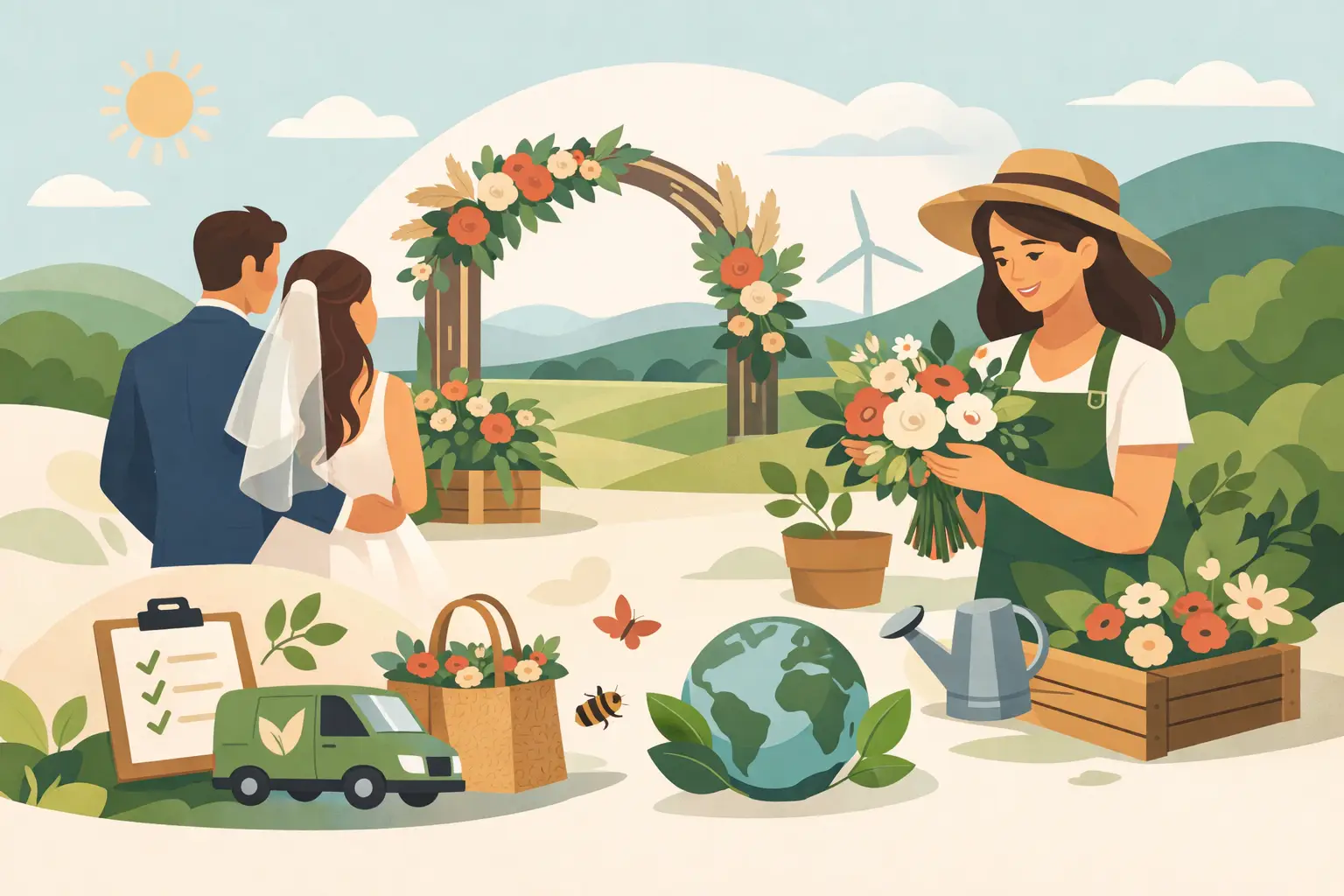
The loveliest wedding flowers rarely look as though they have been forced into place. They feel gathered, thoughtful and entirely right for the setting, the season and the people in the room. If you are searching for a sustainable wedding florist UK couples can trust, that instinct matters. Sustainability in wedding floristry is not a fashionable extra. It shapes how flowers are grown, how they travel, how they are arranged and how naturally they sit within your day.
For many couples, the first surprise is that wedding flowers can carry a fairly heavy footprint. Imported blooms flown in from overseas, out-of-season varieties, single-use plastics, floral foam and excessive packaging have all become normal in parts of the industry. Beautiful flowers and responsible choices are not opposites, but they do require intention. A good florist will help you understand where compromises are worth making and where small changes can make a meaningful difference.
What a sustainable wedding florist UK service should really mean
The phrase gets used rather loosely, so it is worth looking beyond surface claims. A genuinely sustainable florist is usually thinking about provenance, seasonality, mechanics and waste rather than simply wrapping a bouquet in brown paper and calling it eco-friendly.
In practice, that often means prioritising British-grown flowers where possible, designing with the seasons rather than against them, and avoiding floral foam. It may also mean reusing vessels, choosing mechanics that can be repurposed or composted, and ordering carefully so stems are not wasted. None of this needs to result in flowers that feel worthy or sparse. In experienced hands, sustainable floristry can be abundant, textured and deeply elegant.
There is, however, some nuance here. Very few wedding florists in the UK can source every stem locally for every wedding throughout the year. If you are marrying in early spring and hoping for a very specific flower that is not yet available from British growers, your florist may need to source selectively from abroad. Sustainability is often about making better choices overall, not claiming impossible purity.
Why British-grown and seasonal flowers matter
British flowers have a character that is difficult to replicate. They tend to move more naturally, carry subtle scent and reflect the landscape and weather around them. That is part of their charm. A meadowy August arrangement made with local cosmos, dahlias and scented herbs feels connected to place in a way that imported, standardised flowers often do not.
There are practical benefits too. British-grown flowers usually travel fewer miles and arrive fresher, which can reduce transport impact and support flower farmers closer to home. When you choose seasonally, you are also working with what is naturally at its best. That often gives you stronger colour, better quality and more interesting textures.
The trade-off is flexibility. If your heart is set on peonies in October or lily of the valley in high summer, a seasonal approach may feel limiting. The gentler way to think about it is this: instead of beginning with a fixed shopping list, begin with a feeling. Soft and airy, romantic and garden-led, sculptural and understated – these design directions can usually be achieved beautifully with the right seasonal ingredients.
Questions worth asking your florist
When couples first enquire, they are not always sure what they should be looking for. That is completely understandable. Most people plan a wedding once, and flowers are often one of the more mysterious parts of the process. A thoughtful florist should be happy to guide you.
Ask where their flowers are sourced and whether British-grown flowers are prioritised when in season. Ask how they approach floral foam and what alternatives they use for installations and table work. Ask what happens to arrangements after the wedding – can they be moved from ceremony to reception, gifted to guests or composted afterwards? These questions are not there to catch anyone out. They simply tell you how considered a florist’s process really is.
It is also useful to ask how they design around your budget. Sustainability is not always the cheapest route in the short term, particularly when working with small-scale British growers and bespoke design. But a skilled florist can often suggest smarter ways to spend – fewer pieces, better placed, with more emphasis on quality and movement rather than sheer quantity.
Sustainable wedding flowers do not mean sacrificing style
This is the concern many couples never quite say aloud. They worry that choosing a more sustainable approach means their wedding flowers will look less generous, less polished or less special. In reality, the opposite is often true.
The best sustainable wedding florals feel personal because they are not built from a standard recipe. They respond to the time of year, the venue and your own taste. A spring wedding might lean into blossom, narcissi, tulips and hellebores. High summer can bring sweet peas, cosmos, garden roses and herbs. Autumn has seedheads, dahlias and rich textural branches. Winter asks for restraint and structure, which can be incredibly beautiful.
This kind of floristry tends to have life in it. Stems bend slightly, petals open naturally, colours sit together in a less obvious way. For couples who want flowers that feel refined but not rigid, this is often exactly the appeal.
How a foam-free approach changes the work
Floral foam has long been used to hold arrangements in place, especially for large wedding installations. It is convenient, but it is also a single-use product containing microplastics. Many florists now avoid it altogether, using alternatives such as reusable mechanics, moss, chicken wire, pin frogs and carefully constructed support structures.
For the client, this may not be visible at all – and that is rather the point. The arrangement should still feel generous and well resolved. Behind the scenes, though, foam-free floristry often takes more planning and more technical skill. It asks the florist to understand balance, water access and stem behaviour more deeply.
That is why experience matters. Sustainable methods are not just a set of values. They are a craft discipline.
A local florist can make the process gentler
Working with a florist who knows your area can make an enormous difference, particularly for weddings in Derbyshire and the surrounding towns and villages. Local knowledge helps with practicalities such as delivery timings, venue access, room temperatures and what tends to work well in a barn, country house or marquee.
It also allows for a more personal conversation. Rather than selecting from a generic package, you can talk about the mood you want to create, the details of your dress, the colours already present in the venue and how flowers might move through the day. For some couples, that means a bouquet and a handful of key arrangements. For others, it means a fuller floral story. Neither is more correct. It depends on the wedding, the space and what matters most to you.
For those looking in Derbyshire, Chesterfield or Matlock, a boutique florist such as Sweetpea Macfie often offers that quieter, one-to-one approach – less formula, more careful listening.
What to prioritise if sustainability matters to you
If you are trying to make good choices without becoming overwhelmed, focus on the decisions that tend to have the biggest impact. Choose seasonal flowers. Be open to British-grown stems and trust your florist to interpret your brief rather than replicate a Pinterest image exactly. Ask for foam-free designs. Reuse ceremony flowers at the reception where possible, and think about what should happen to the flowers after the event.
Most importantly, choose a florist whose work already reflects these values. You should not need to persuade them into a sustainable approach. It should be woven into how they source, design and advise from the outset.
There is also room for honesty. You may decide that one sentimental flower matters enough to import. You may need designs that prioritise longevity for a very warm venue. You may choose candles and bud vases over a large suspended installation because it feels lighter on both budget and materials. Sustainability is rarely about achieving perfection. It is about being deliberate.
The most memorable wedding flowers are not the ones that shout the loudest. They are the ones that feel as though they belong – to the season, to the setting and to you. If your florist can hold beauty, craftsmanship and responsibility in the same hand, you are already on the right path.
 I’m Marie,
the florist behind Sweet Pea Macfie.
I began Sweet Pea Macfie in 2018 and am a qualified florist with over 13 years’ experience.
The name is an ode to my Grandad, John Macfie, who in his day was one of the best Sweet pea growers in the country. He exhibited at all the major flower shows, and his Chelsea Gold Medal is one of my most treasured possessions, so you could say that growing and arranging flowers is in my blood.
I’m Marie,
the florist behind Sweet Pea Macfie.
I began Sweet Pea Macfie in 2018 and am a qualified florist with over 13 years’ experience.
The name is an ode to my Grandad, John Macfie, who in his day was one of the best Sweet pea growers in the country. He exhibited at all the major flower shows, and his Chelsea Gold Medal is one of my most treasured possessions, so you could say that growing and arranging flowers is in my blood.