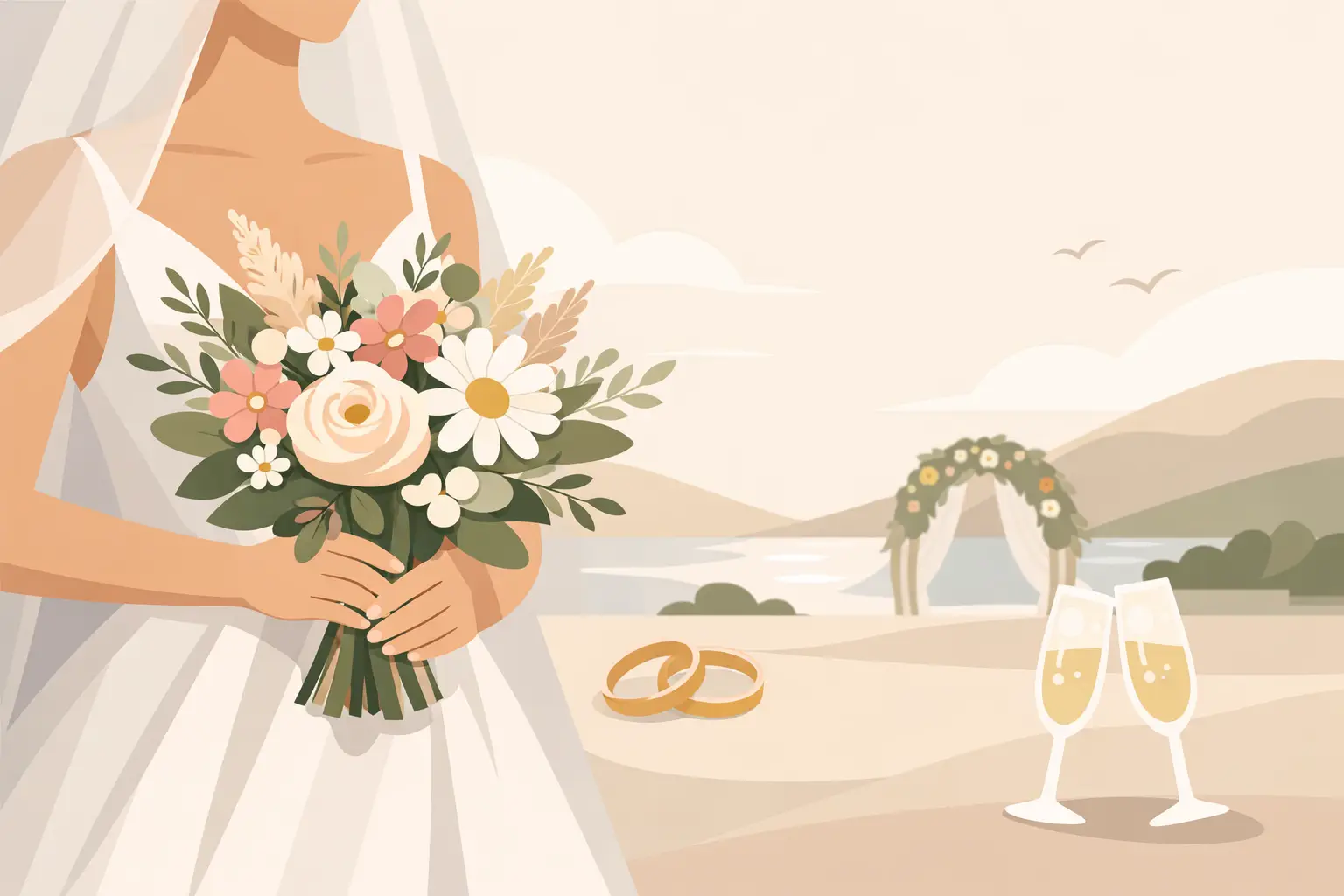
A bouquet can change the whole feel of a wedding dress. Not by shouting for attention, but by softening a silhouette, adding movement to photographs and making everything feel more personal. The best natural wedding bouquet ideas do exactly that – they look as though they belong to the day, the setting and the person carrying them.
For couples drawn to a more nature-led style, the appeal is rarely about making flowers look wild for the sake of it. It is usually about wanting something less fixed, less uniform and more expressive. A natural bouquet has rhythm to it. It carries shape, scent and season in a way that feels easy rather than overly arranged.
What makes natural wedding bouquet ideas work so well?
A natural bouquet is not simply loose or rustic. Done well, it is carefully composed, with enough structure to hold beautifully and enough softness to feel unfussy. The difference lies in the materials and in the balance between them.
Texture matters as much as colour. Garden roses, sweet peas, cosmos, scabious and trailing foliage all bring something different to the hand-tied shape. Some flowers give body, some give movement, and some provide that small moment of delicacy that keeps the whole bouquet from feeling dense or formal. This is often why natural designs photograph so well – they have depth and variation, rather than reading as one solid block of flower.
Seasonality is another part of the charm. When a bouquet is built around what is naturally flowering at the time of the wedding, it tends to feel more convincing. Spring flowers have a freshness and lightness that cannot quite be imitated in August. Late summer has a fullness and softness of its own. Leaning into that season rather than resisting it usually leads to better results, and often to more character as well.
Natural wedding bouquet ideas by style
Soft and romantic
If you love an elegant, relaxed look, a soft romantic bouquet is often the natural place to start. This style might include garden roses, sweet peas, astilbe, scented herbs and airy foliage, arranged in a rounded but not rigid shape. The palette can stay within blush, cream, soft apricot and muted green, or move into dusty pinks and gentle mauves if you want a little more depth.
This kind of bouquet suits many wedding settings, from a country house to a village church or a marquee in the garden. It is timeless without feeling formal. The trade-off is that very pale flowers can sometimes read less distinctly in bright midday light, so a florist may suggest adding a few tonal shifts or stronger centres to stop the bouquet disappearing against a light dress.
Meadow-inspired and airy
For couples who want flowers that feel gathered and full of movement, meadow-inspired bouquets are especially appealing. Think cosmos, nigella, daisies, scabious, ammi and finer foliage with space between the stems. This style has a lovely looseness to it and works particularly well for outdoor weddings or relaxed celebrations where polished perfection would feel out of place.
The key is restraint. Too many different elements can tip a bouquet from natural to untidy. A good meadow-style bouquet still needs a clear shape and a sense of editing, otherwise it may not hold together visually in photographs. Done properly, it feels light, textural and entirely at ease.
Sculptural and understated
Not every natural bouquet needs to look soft and floaty. Some of the most striking designs are quieter and more sculptural, using fewer ingredients with stronger forms. Hellebores, calla lilies, fritillaria, tulips, clematis vine or beautifully shaped branches can create something contemporary while still feeling rooted in nature.
This approach often suits modern dresses and pared-back weddings, especially where the styling is simple and thoughtful. It is a good choice if you dislike anything too pretty or overfilled. The bouquet may be smaller, but it can still feel deeply characterful because every stem earns its place.
Fragrant and garden-led
For many people, scent is part of memory. A bouquet with fragrance has a quiet emotional pull, and for an intimate wedding it can make the flowers feel even more personal. Sweet peas, stocks, mint, rosemary, scented roses and flowering herbs all bring perfume as well as texture.
This style works beautifully for spring and summer weddings, particularly if the celebration is at home, in a garden or somewhere with a natural, unforced atmosphere. It does depend on availability, and scent can vary from one crop to another, especially with British-grown flowers, but that variation is part of what makes the bouquet feel real rather than standardised.
Choosing flowers that suit the season
Spring
Spring bouquets often have a natural delicacy that is hard to beat. Tulips, narcissi, ranunculus, anemones, muscari, blossom and early foliage all lend themselves to gentle movement and fresh colour. Spring is ideal if you want your bouquet to feel light in the hand and subtly expressive rather than abundant.
The weather can still be cool and changeable, which usually helps flowers last well. Colour palettes often lean towards cream, butter yellow, soft blue, pale pink and fresh green, though deeper spring shades can be very effective too.
Summer
Summer opens up more choice, especially for British-grown flowers. Roses, sweet peas, cosmos, scabious, cornflowers, dahlias later in the season and a host of textural foliage make summer one of the richest times for natural bouquet design. This is when many of the most relaxed and romantic bouquet styles truly come into their own.
Because summer weddings can be warm, the choice of flowers needs a practical eye as well as an aesthetic one. Some delicate blooms may need a little more care if the day includes travel, heat or a long ceremony outdoors.
Autumn
Natural does not have to mean pastel. Autumn bouquets can be beautifully natural in a richer palette, with caramel, plum, russet, smoky pink and olive green all feeling entirely at home. Dahlias, late roses, seed heads, textural grasses and turning foliage create depth without heaviness.
Autumn flowers tend to have a moodier presence, which can be especially lovely against silk, satin and softer tailoring. If you want warmth without anything too bold, this season offers plenty of nuance.
Colour, shape and scale matter more than trends
One of the easiest mistakes with wedding flowers is choosing a bouquet because it is fashionable rather than because it suits the person carrying it. Natural wedding bouquet ideas are at their best when they reflect the wearer, the dress and the atmosphere of the day.
A petite bouquet can be perfect with a sleek dress or for someone who feels uncomfortable holding a large arrangement. A looser, slightly more generous shape may suit fuller skirts or a more relaxed bridal look. Likewise, colour should not be chosen in isolation. Soft whites and greens can be elegant and fresh, but they may need tonal variation to avoid looking flat. Brighter shades can feel joyful and natural too, especially if they are drawn from the season rather than forced into it.
This is where personal guidance makes such a difference. Couples often arrive with a handful of saved images that all look lovely but do not necessarily belong together. The role of an experienced florist is not simply to recreate one picture, but to interpret what you are really responding to – perhaps movement, perhaps softness, perhaps a sense of garden abundance – and translate that into flowers that work for your wedding.
The beauty of British-grown flowers
For a natural bouquet, British-grown flowers often bring something imported stems cannot quite replicate. There is usually more character in the shape, more seasonality in the palette and a greater sense of place. The flowers feel connected to the time of year, which gives the bouquet an authenticity that is difficult to fake.
There are practical and ethical benefits too. Shorter supply chains, fresher stems and more thoughtful sourcing all matter, especially for couples who care about provenance and sustainability. It does mean embracing a little flexibility. British flowers are led by weather and season, so exact varieties cannot always be guaranteed far in advance. But that slight unpredictability is often where the magic lies. You get flowers at their best, not flowers made to fit a rigid shopping list.
At Sweetpea Macfie, this is very much the starting point for wedding work – not generic formulas, but bouquets shaped by season, setting and the individual couple.
A natural bouquet should still feel considered
There is a quiet misconception that natural flowers are somehow less designed than formal ones. In reality, the opposite is often true. Making a bouquet feel effortless takes judgement. Stem choice, weight, balance, texture and line all need careful thought, especially when the finished result is meant to look easy.
That is why the most beautiful natural bouquets do not feel messy or overworked. They have a sense of ease, but also a sense of intention. Every trailing tendril, every open face and every textural note contributes to the whole.
If you are choosing your wedding flowers now, start with how you want the bouquet to feel rather than what you think it should include. Soft, airy, sculptural, scented, meadow-like, refined – those instincts are often more useful than a fixed flower list. The right bouquet will not just match your dress. It will feel as though it belongs in your hands.
 I’m Marie,
the florist behind Sweet Pea Macfie.
I began Sweet Pea Macfie in 2018 and am a qualified florist with over 13 years’ experience.
The name is an ode to my Grandad, John Macfie, who in his day was one of the best Sweet pea growers in the country. He exhibited at all the major flower shows, and his Chelsea Gold Medal is one of my most treasured possessions, so you could say that growing and arranging flowers is in my blood.
I’m Marie,
the florist behind Sweet Pea Macfie.
I began Sweet Pea Macfie in 2018 and am a qualified florist with over 13 years’ experience.
The name is an ode to my Grandad, John Macfie, who in his day was one of the best Sweet pea growers in the country. He exhibited at all the major flower shows, and his Chelsea Gold Medal is one of my most treasured possessions, so you could say that growing and arranging flowers is in my blood.