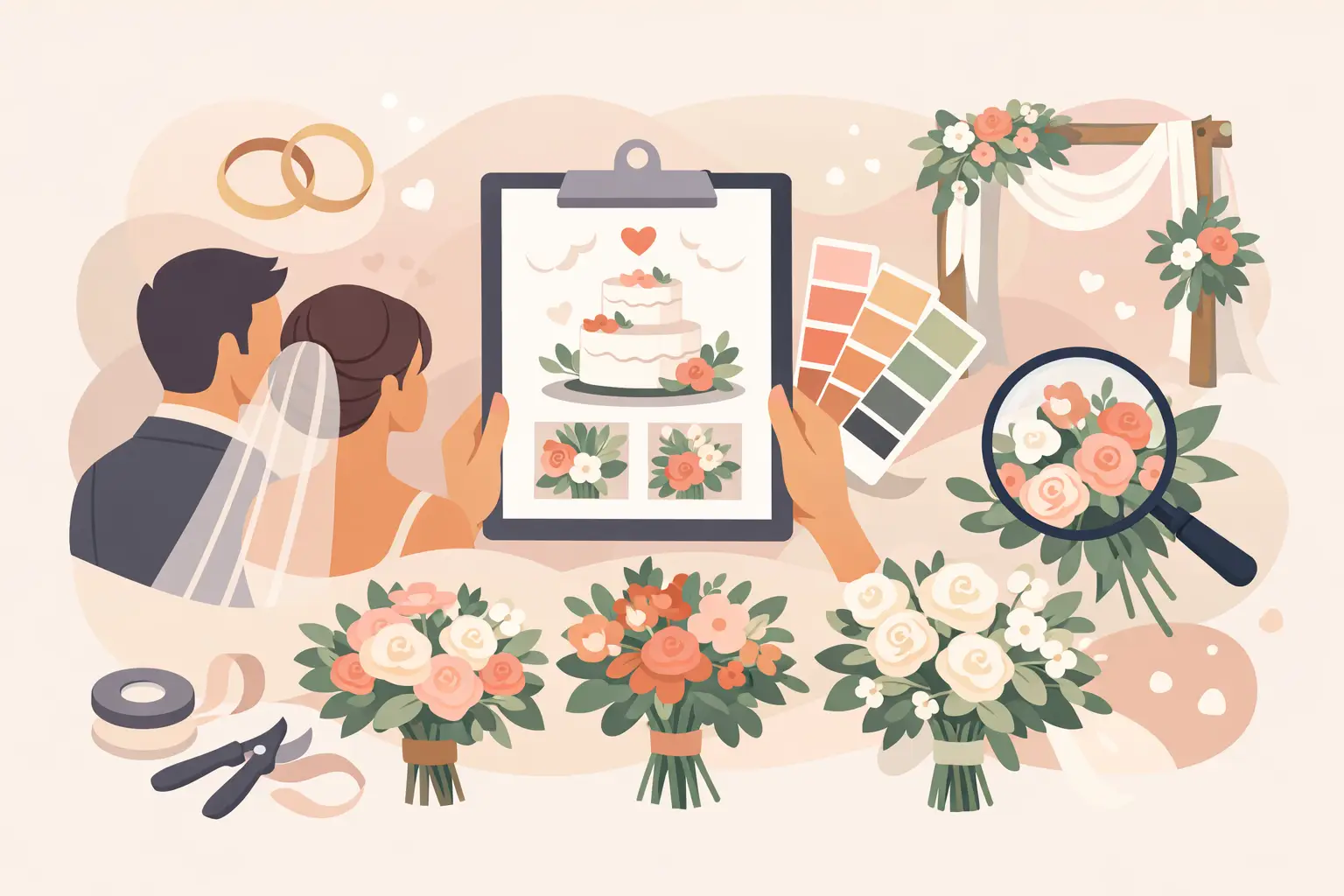
The point where many couples feel stuck is not usually the dress, the suit or even the venue. It is the moment they realise how much atmosphere flowers quietly carry. If you are wondering how to choose wedding flowers, the answer is rarely to start with a list of blooms. It starts with the feeling you want the day to have, and with flowers that support that feeling rather than compete with it.
Wedding flowers work best when they look as though they belong – to the season, to the setting and to you. That does not mean every arrangement must be rustic, wild or heavily styled. It simply means the flowers should feel considered. The most memorable wedding florals are often the ones that seem effortless, even though a great deal of thought sits behind them.
How to choose wedding flowers by starting with the day itself
Before talking about varieties, colours or bouquet shapes, think about the character of your wedding. A ceremony in a stone church in Derbyshire asks for something quite different from a marquee in a family garden or a small celebration in a pub with low beams and candlelight. Flowers should respond to the architecture, the light and the scale of the space.
A large venue can carry stronger gestures – perhaps meadow-style urns, generous aisle flowers or a fuller installation above a table. A more intimate setting often suits a lighter touch. A cluster of bud vases, a loose bouquet with movement, or a thoughtful arrangement on a mantel can feel more appropriate than trying to fill every corner. Bigger is not always better. Sometimes restraint gives flowers more presence.
It also helps to think about where flowers will be most noticed. Couples can sometimes feel pressure to flower every surface, when in practice guests remember the entrance, the ceremony backdrop, the bridal bouquet and the tables where they sit. If your budget needs to work hard, prioritise the places that shape the experience first.
Begin with mood, not a flower wish list
It is completely understandable to arrive with favourite flowers in mind. Peonies, roses, sweet peas and dahlias all have their admirers, and rightly so. But choosing wedding flowers purely by naming blooms can lead to disappointment if those flowers are out of season, too delicate for the weather, or not the right scale for the design.
A more useful place to begin is mood. Do you want the flowers to feel romantic and soft, gathered and garden-like, quietly elegant, or a little looser and more textural? Are you drawn to delicate movement or a neater, more structured look? Once the overall feeling is clear, the flower choices become much easier.
This approach also leaves room for seasonality. British-grown flowers, in particular, are at their best when allowed to speak in their proper season. Spring has its own freshness and delicacy. Summer brings generosity and colour. Early autumn can offer rich tones and beautiful texture. Winter often asks for a more sculptural, understated palette. When couples lean into that rhythm rather than fighting it, the flowers tend to look more natural and more individual.
Seasonality matters more than many people expect
One of the most practical ways to choose well is to accept that flowers are not static products. They are living materials. Availability shifts. Weather affects size, colour and vase life. A flower you have seen online in abundance may be fleeting in reality.
That is not a problem. In many ways it is part of the charm. Seasonal flowers often have more character than imported stems flown in to mimic a look at any time of year. They also tend to suit a more relaxed and elegant style because they are used when they are naturally at their best.
If provenance matters to you, ask your florist what is likely to be beautiful at the time of your wedding rather than insisting on a fixed list from the outset. That conversation usually leads to better work.
Colour is about tone as much as palette
When couples think about wedding flowers, they often ask for a colour scheme. That is sensible, but colour in floristry is more subtle than matching bridesmaids’ dresses or napkins. It is often tone that does the real work.
For example, white can be crisp and formal or soft and almost creamy depending on the flowers used. Pink can lean sugary, muted, dusky or bright. Green can feel fresh, wild, elegant or quite dramatic. The difference lies in texture, shape and the balance between shades.
It helps to gather a few visual references, but try not to curate images that all come from different climates, seasons and budgets. A thoughtful florist will usually look beyond the headline colours and ask what you actually respond to. Often clients say they dislike yellow, then realise they love soft butter tones in spring. Or they ask for all white, then discover they really want warmth and depth, which comes from layers of ivory, oat, green and perhaps a touch of blush.
Flowers should sit comfortably alongside your clothing, venue materials and the time of year. The aim is cohesion, not rigid matching.
Think about personal flowers and venue flowers differently
Not every floral element needs the same treatment. Your bouquet is close to you all day. It appears in photographs, is held in the hand, and should feel comfortable as well as beautiful. Table flowers, by contrast, need to work from a distance and among candles, glassware and conversation.
This is why copying one bouquet style across every arrangement rarely gives the best result. Personal flowers often benefit from finer detail and a little movement. Venue flowers may need more shape, repetition or scale. Buttonholes need durability. Ceremony flowers may need to look good from the back of the room as much as close up.
When deciding where to invest, consider what carries emotional weight. For some couples it is the bouquet and buttonholes. For others, the ceremony is the heart of the day and deserves the strongest floral focus. There is no universal formula.
How to choose wedding flowers with your budget in mind
Budget can be an awkward subject, but it is far easier to create something beautiful when everyone is honest from the start. Floristry is shaped by stem count, seasonality, scale, mechanics, labour and installation time. A large floral statement is not expensive simply because it is fashionable. It requires quantity, skill and often early-morning set-up.
That said, a thoughtful budget can still go a long way. Repurposing ceremony flowers at the reception is often sensible. Choosing in-season British flowers can offer both beauty and better value. Concentrating your spend in two or three key areas usually has more impact than scattering it too thinly.
The trade-off is usually between scale and intricacy. If you want abundant, flower-heavy designs throughout, the budget needs to support that. If your budget is more modest, it may be wiser to choose fewer moments and let them be lovely.
Choose a florist whose style already feels right
A good florist can guide you, but they are not magicians who should be expected to reproduce every style equally well. If you are drawn to natural, seasonal work with movement and texture, choose someone whose portfolio already shows that understanding. If their work consistently feels considered and balanced, that matters far more than whether they have used one exact flower before.
The relationship matters too. Wedding flowers are personal. You should feel listened to, not steered towards a package that happens to be easiest to sell. The best conversations are often the calmest ones, where your florist asks practical questions, notices what matters to you, and gently explains where an idea will sing and where it may be less successful.
For couples in Derbyshire who value British flowers, understated elegance and a more personal process, that one-to-one guidance can be the difference between flowers that simply fill a brief and flowers that truly belong to the day.
Let the flowers reflect you, not just the algorithm
There is a great deal of wedding imagery online, and some of it is beautiful. But there is also a sameness to what gets saved and shared. If you feel torn between what you actually like and what appears to be popular, trust your own instincts.
The most affecting wedding flowers are not usually the ones chasing a trend. They are the ones that feel honest. Perhaps that means scented spring flowers because they remind you of home. Perhaps it means a quieter palette because your venue already has enough drama. Perhaps it means embracing the hedgerow mood of an English summer rather than asking flowers to behave like they belong in another country entirely.
Flowers do not need to shout to be memorable. They need to feel right. If you choose them with care – allowing for season, setting, budget and your own natural taste – they will do what the best wedding flowers always do: they will hold the mood of the day gently, and beautifully, in place.
When you are unsure, ask not which flowers you should have, but what kind of atmosphere you want people to remember when they think back on your wedding.
 I’m Marie,
the florist behind Sweet Pea Macfie.
I began Sweet Pea Macfie in 2018 and am a qualified florist with over 13 years’ experience.
The name is an ode to my Grandad, John Macfie, who in his day was one of the best Sweet pea growers in the country. He exhibited at all the major flower shows, and his Chelsea Gold Medal is one of my most treasured possessions, so you could say that growing and arranging flowers is in my blood.
I’m Marie,
the florist behind Sweet Pea Macfie.
I began Sweet Pea Macfie in 2018 and am a qualified florist with over 13 years’ experience.
The name is an ode to my Grandad, John Macfie, who in his day was one of the best Sweet pea growers in the country. He exhibited at all the major flower shows, and his Chelsea Gold Medal is one of my most treasured possessions, so you could say that growing and arranging flowers is in my blood.