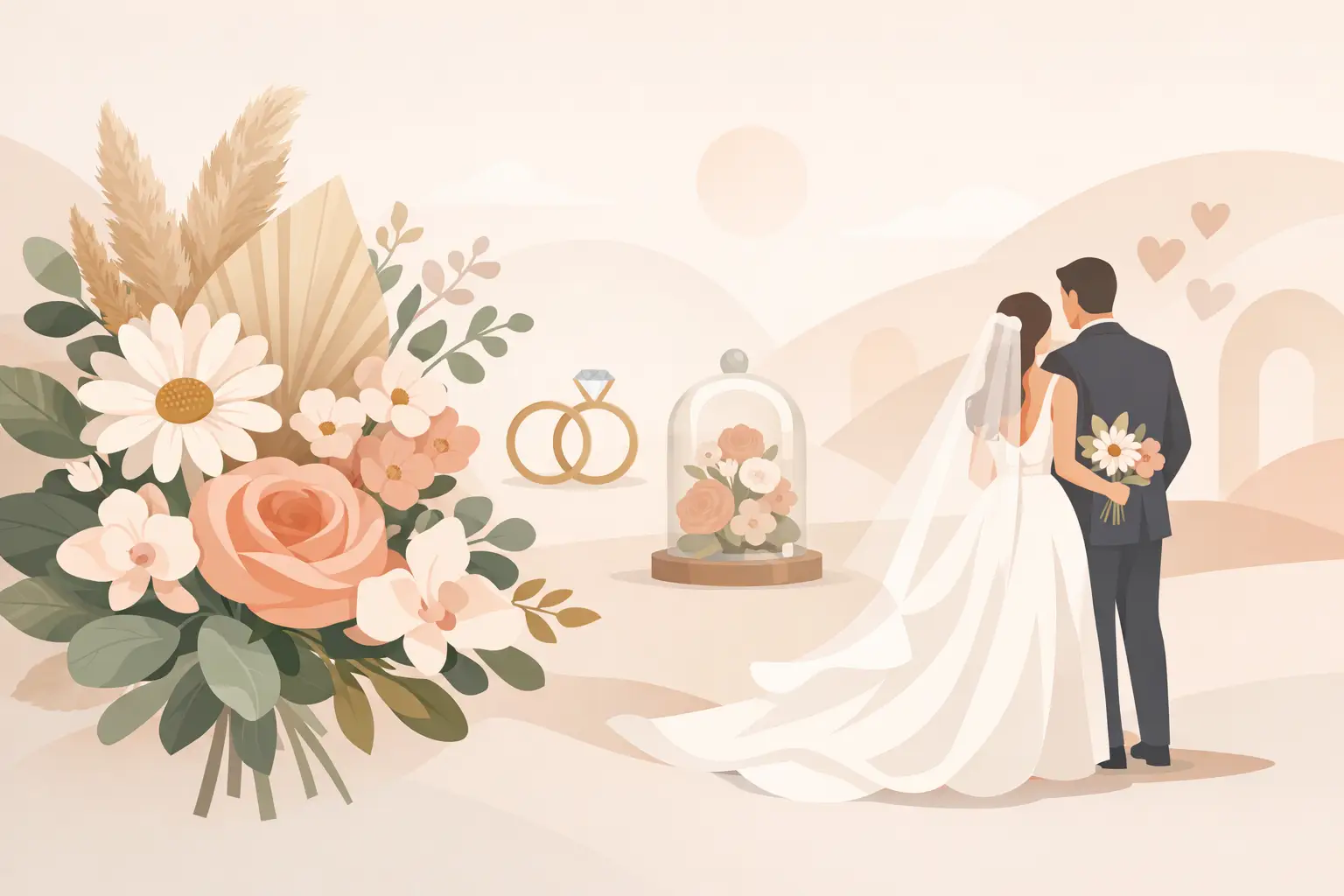
A wedding can look beautifully current without being tied too closely to a passing look. The most compelling wedding flower trends are less about copying a particular image and more about choosing flowers with a sense of place, season and personality. For couples marrying in Derbyshire, that might mean scented sweet peas in early summer, richly coloured dahlias in September, or sculptural branches gathered into a winter celebration.
Flowers are often one of the first things guests notice, yet the best designs do not ask for attention at every turn. They create atmosphere. They soften a ceremony space, make a table feel welcoming and give the day a visual thread that feels entirely your own.
Wedding flower trends that feel natural, not manufactured
The move towards a looser, garden-led style continues, but it has matured. Rather than arrangements that appear simply wild, couples are choosing designs that feel considered while retaining movement and a little unpredictability. Curving stems, buds, seed heads, trailing foliage and a mixture of flower sizes give arrangements life.
This approach is especially lovely in village halls, barns, country houses and intimate Derbyshire venues, where flowers can work with the setting rather than compete with it. A meadow-like ceremony arrangement may be made with a clear shape and careful colour balance, even if it appears as though it has just grown there. Good floristry makes that ease possible.
Seasonal British flowers are central to this look. They bring variations in stem length, scent and form that cannot be reproduced by a uniform, imported flower recipe. In spring, narcissi, tulips, blossom and ranunculus offer freshness and detail. Summer brings cosmos, sweet peas, roses and larkspur; autumn provides dahlias, chrysanthemums, grasses and berries. Winter has its own quiet beauty in hellebores, foliage, dried textures and branches.
Choosing what is naturally at its best can also make the design feel more distinctive. A June wedding and a November wedding need not share the same palette or ingredients, and that is something to enjoy rather than work around.
Texture is taking the lead
Large-headed focal flowers still have their place, but texture is doing much of the expressive work. Airy umbels, delicate grasses, feathery foliage, spires of flowers and tactile seed heads create depth in bouquets and table designs. They also photograph beautifully, particularly when natural light catches the small details.
Texture is not the same as filling every available space. A design needs moments of rest. A single special stem can be more memorable when it has room to be seen, and a smaller number of well-chosen flowers often feels more refined than an arrangement crowded with varieties.
More confidence with wedding flower colour
Soft neutrals remain timeless, particularly for couples drawn to an understated, romantic setting. Cream, ivory, pale green and gentle blush can look wonderfully calm when they are built from flowers with varied forms and plenty of foliage. The key is to avoid a flat, one-note effect. Warm white flowers, silvery leaves, soft caramel tones and a touch of butter yellow can make a neutral palette feel full of life.
At the same time, there is a growing appetite for colour with more personality. Think coral with raspberry, apricot with deep red, or lavender with fresh greens and soft blue. These combinations need not feel loud. They can be layered and nuanced, with a few strong notes carried through bouquets, buttonholes, ceremony flowers and tables.
The best palette depends on the season, the venue and what you wear. A dramatic dahlia can be perfect against the warmth of a late-summer stone barn, while a restrained arrangement of whites and fresh green can suit a candlelit winter ceremony. It also depends on how much colour you want elsewhere. If your stationery, linen or bridesmaids’ dresses are expressive, the flowers may be most effective when they provide a quieter counterpoint.
Ceremony flowers are becoming part of the whole day
Couples are rightly asking more of ceremony flowers. Rather than a display that is used for half an hour and then left behind, designs are increasingly planned to move and evolve through the day. Meadow arrangements can frame the couple during the vows, then sit at the top table or beside the cake. Urns can welcome guests at the ceremony before travelling to the reception. A simple aisle arrangement may become a collection of flowers around the dance floor.
This is not only a sensible use of the flower budget. It creates continuity. Guests may first see an arrangement as a backdrop for the promises you make, then notice it again as they sit down to eat. The flowers become part of the memory of the day rather than a single decorative moment.
Scale is shifting too. Instead of one very large installation, many couples are choosing several considered floral moments: a ceremony focal point, welcoming entrance flowers, generous table designs and a bouquet with real presence. This can feel more immersive and is often better suited to venues with distinct rooms or outdoor spaces.
Sustainability is becoming a design decision
Sustainable wedding flowers are no longer limited to a particular style. They can be abundant, elegant, colourful and celebratory. The difference lies in the choices behind the scenes: prioritising seasonal stems, reducing unnecessary transport, avoiding floral foam where possible and using vessels and mechanics that can be reused.
A foam-free design is not a compromise in creativity. It does require planning and skilled mechanics, especially for larger installations or designs in warm weather. Flowers may be arranged in water-filled vessels, supported with reusable structures or designed so that each stem is placed with care. The result can be lighter, more natural and gentler on the environment.
There are practical trade-offs. If a couple has their heart set on a flower that is unavailable in Britain at their wedding date, it may need to be sourced from further afield. Some delicate seasonal flowers are not suited to hot summer marquees or a full day out of water. An experienced florist can explain these considerations early and suggest alternatives with a similar feeling, rather than promising a look that will not hold well.
At Sweetpea Macfie, a British flower-first approach begins with these honest conversations. Provenance matters, but so does making sure the finished flowers are beautiful, appropriate and reliable for the day itself.
Smaller details are being given more care
Personal flowers are moving away from identical, tightly matched pieces. A bridal bouquet may be gathered and expressive, while bridesmaids carry smaller versions with their own character. Buttonholes can echo the palette without becoming miniature bouquets. Flower girls might hold simple posies, wear a delicate floral hair detail or scatter petals that suit the setting.
These details work best when they belong to the same floral story without being overly coordinated. A wedding does not need every stem to match. It needs a sense of connection.
How to use trends without losing yourselves
Treat trends as a source of ideas, not a checklist. Start with the atmosphere you want your guests to feel when they arrive: relaxed and sunlit, intimate and candlelit, colourful and joyful, or quietly romantic. Then consider the month, venue, clothing and budget. Those decisions will lead the flower choices more usefully than any saved image.
When sharing inspiration, notice what you are responding to. Is it the colour, the shape of the bouquet, the abundance around the ceremony, or the way the flowers sit on a table? A florist can translate that feeling into flowers that are in season and suited to your celebration.
The most lasting wedding flowers have a little of the couple in them. They may include a favourite colour, flowers from a garden you love, a scent that reminds you of home, or simply a preference for designs that feel alive rather than overly polished. That is where a trend becomes something personal – and where the flowers stay with people long after the last petals have fallen.
 I’m Marie,
the florist behind Sweet Pea Macfie.
I began Sweet Pea Macfie in 2018 and am a qualified florist with over 13 years’ experience.
The name is an ode to my Grandad, John Macfie, who in his day was one of the best Sweet pea growers in the country. He exhibited at all the major flower shows, and his Chelsea Gold Medal is one of my most treasured possessions, so you could say that growing and arranging flowers is in my blood.
I’m Marie,
the florist behind Sweet Pea Macfie.
I began Sweet Pea Macfie in 2018 and am a qualified florist with over 13 years’ experience.
The name is an ode to my Grandad, John Macfie, who in his day was one of the best Sweet pea growers in the country. He exhibited at all the major flower shows, and his Chelsea Gold Medal is one of my most treasured possessions, so you could say that growing and arranging flowers is in my blood.