
A garden rose with its soft, changing petals, a stem of scented sweet pea, a meadow-like gathering of cornflowers and grasses – British flowers bring a sense of place that cannot be manufactured. This British cut flowers guide is for anyone choosing flowers for a wedding, a farewell or a thoughtful gift and wanting to understand what is in season, why it matters and how to make choices that feel right for the moment.
British-grown does not mean a restricted or rustic look. It means working with the natural generosity of each season: the first hopeful stems of spring, the abundance of high summer, the burnished texture of autumn and the sculptural detail available in winter. With thoughtful design, seasonal flowers can feel quietly elegant, richly personal and entirely suited to the occasion.
What makes British cut flowers different?
The most immediate difference is freshness. Flowers grown closer to home usually spend less time travelling through warehouses and distribution networks before they reach the florist. They often arrive with more life in their stems, more scent and the natural variation that makes a bouquet feel gathered rather than assembled.
Provenance matters too. Choosing British flowers gives a design a connection to the time and place in which it is made. For a Derbyshire wedding, locally grown dahlias, cosmos or garden roses can sit beautifully against a country setting without looking themed. For a funeral tribute, the gentler forms of seasonal flowers can offer warmth and sincerity without feeling overdone.
There are environmental considerations as well. British flowers can reduce the distance flowers travel, and buying from growers who work in step with the seasons supports a more diverse local flower economy. However, British-grown is not a single guarantee of sustainability. Growing methods, heating, packaging and transport all play a part. The most considered approach is to ask about provenance, choose what is naturally abundant, and avoid expecting every flower in every colour at every time of year.
A British cut flowers guide to the seasons
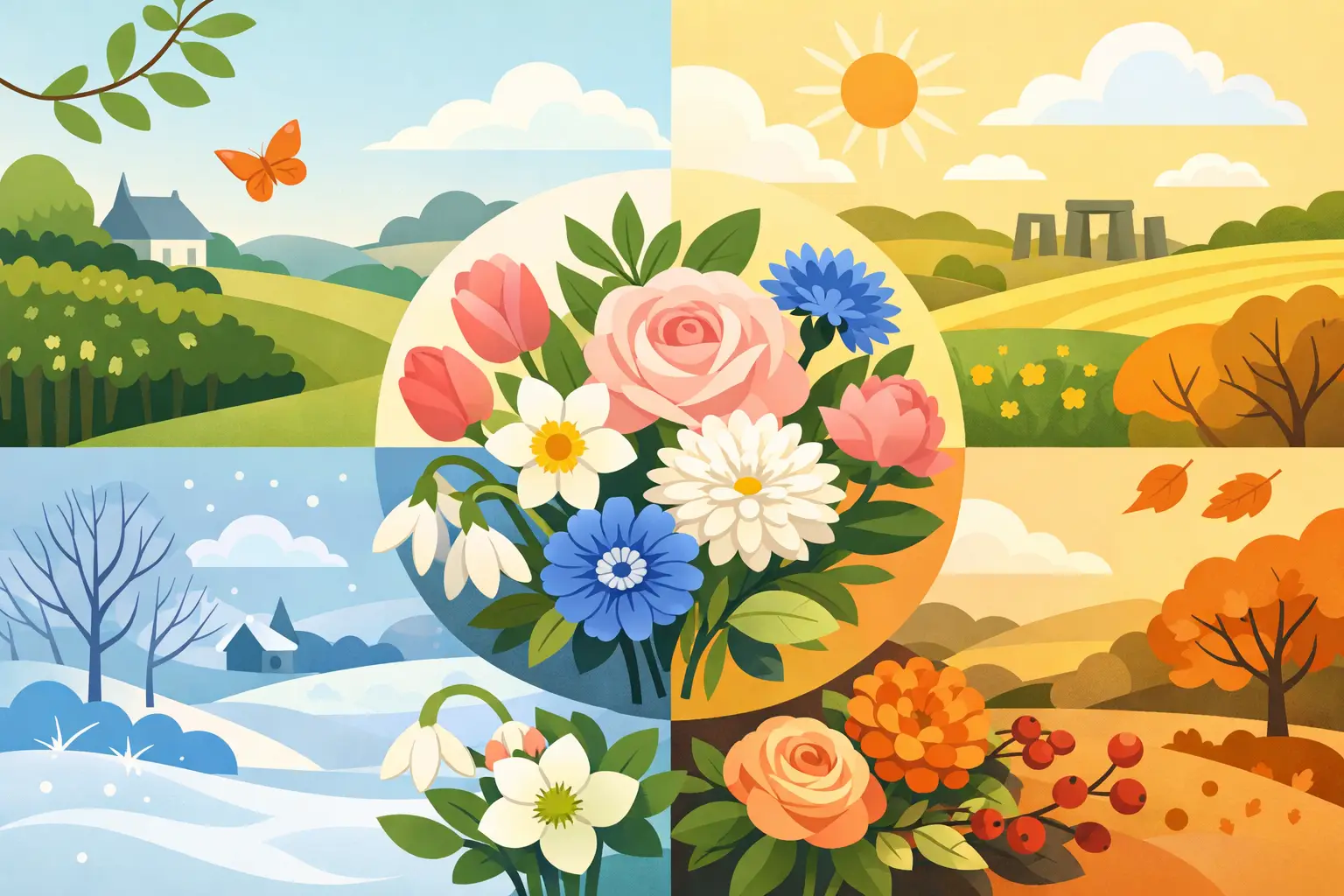
Seasonality is not a limitation to design. It is often the starting point for its character. Exact availability changes with weather, so it is better to choose a seasonal mood and a palette than pin everything on one particular flower.
Spring: fresh, delicate and full of promise
From roughly March to May, spring flowers have a lightness that suits intimate weddings, new-home gifts and gentle expressions of sympathy. Narcissi, tulips, ranunculus, anemones, fritillaries, early blossom, lilac and the first sweet peas offer movement, scent and a sense of renewal.
Spring is ideal for softer colour stories: cream, pale yellow, buttercup, apricot, blue and the tenderest pinks. Tulips are particularly beautiful when allowed to bend and grow in a vase, rather than being forced into a rigid shape. They are living stems and will continue to move, which is part of their charm.
For wedding flowers, bear in mind that some spring favourites are brief visitors. Lily of the valley, for example, is much loved but can be difficult to source in quantity and is not always practical for every design. A florist can suggest flowers with a similar delicacy while keeping the overall feeling intact.
Summer: colour, scent and generous abundance
June to August is the season many people picture when they think of British flowers. Sweet peas, garden roses, delphiniums, cornflowers, nigella, scabious, cosmos, calendula, achillea and fragrant herbs create designs with softness and energy. It is a particularly lovely time for wedding flowers with a natural, just-gathered feel.
The choice is broad, but heat needs consideration. A bouquet travelling in a warm car or displayed outdoors in full sun will have different requirements from flowers kept in a cool church or reception room. Delicate sweet peas and garden roses may be best kept for hand-tied bouquets, bud vases or shaded table arrangements, while more resilient flowers can take the lead elsewhere.
Summer also offers the opportunity to be more playful with colour. Raspberry, coral, lemon, lavender and blue can sit together beautifully when the textures are carefully balanced. The result need not be loud. A restrained palette with one deeper accent often feels more considered than using every available shade.
Autumn: texture, warmth and character
From September into November, British flowers become richer in colour and more varied in form. Dahlias are often the stars, joined by chrysanthemums, asters, sedum, amaranthus, rudbeckia, grasses, rose hips and seedheads. This is a wonderful season for flowers with depth and personality.
Autumn wedding flowers can be warm without being heavily rustic. Think plum, antique rose, soft caramel, smoke, faded peach and deep berry, lifted by a lighter flower or foliage. A dahlia can bring real presence to a bridal bouquet, but its delicate petals mean it needs thoughtful handling. For a large event, it is wise not to depend on one named dahlia variety alone, as weather can affect a crop quickly.
For a sympathy arrangement, autumn’s seedheads and foliage can bring a quieter, more reflective quality. They are especially appropriate when a family would prefer something natural and garden-led rather than formal or highly structured.
Winter: detail, structure and understated beauty
British choice is naturally narrower in winter, but it need not feel sparse. Evergreen foliage, eucalyptus grown in Britain where available, winter berries, hellebores, narcissi, catkins, scented stocks and flowering branches can create arrangements full of atmosphere. The beauty lies in line, texture and thoughtful restraint.
Winter designs often suit tonal palettes: greens, ivory, white, burgundy, soft brown and the blue-grey of foliage. Branches add height and shape, while berries and seedheads provide detail. Hellebores are exquisite but delicate, so they are often better used in arrangements where they can be admired closely rather than in a bouquet that will be carried for hours.
Choosing flowers for the occasion
The same flower can say different things depending on how it is used. For weddings, the starting point is usually the setting, the season and the feeling a couple wants to create. It may be airy and meadow-like, softly romantic, or more architectural and contemporary. A good floral brief leaves room for the season to contribute rather than trying to recreate a photograph taken in another month.
For funeral flowers, personal meaning comes first. A favourite garden flower, a colour someone wore often, or a simple loose and seasonal style can make a tribute feel more like a true gesture of remembrance. Flowers do not need to be extravagant to be moving. A carefully chosen sheaf, a garden-inspired wreath or a collection of naturally arranged stems can speak with great tenderness.
For gifts, seasonality makes the bouquet feel current and individual. Instead of asking for a fixed recipe, it can help to share the recipient’s favourite colours, the occasion and whether they enjoy something soft and romantic, bright and joyful, or simple and textural. This gives the florist room to choose the best flowers available that week.
How to ask for British-grown flowers
If British provenance is important, say so at the start. A florist can then design around what is being cut locally and explain where some flexibility may be helpful. Certain flowers are only available in a particular British season, while others may be sourced from British growers for a longer period under protected growing conditions.
It is also worth deciding what matters most. Is it essential that every stem is British-grown, or would you prefer a predominantly British design with one or two out-of-season accents? For some weddings, a specific flower carries personal significance and is worth including. For others, a fully seasonal approach feels more aligned with the day. Neither choice is wrong, but clarity helps create a design that reflects your values as well as your taste.
Ask about mechanics and packaging too. Foam-free floristry uses reusable vessels, chicken wire, moss alternatives, pin holders or carefully constructed mechanics in place of traditional floral foam where appropriate. It can require more planning and skill, but it supports a more considered way of working. Minimal packaging and reusable or recyclable elements also make a difference, particularly for regular gifting and larger celebrations.
Helping your flowers last
British flowers are often beautifully fresh, but they still benefit from simple care. Place gift bouquets into a clean vase with fresh water as soon as possible, removing any leaves that would sit below the waterline. Recut the stems with sharp scissors or secateurs, keep the flowers away from direct sunshine, radiators and fruit bowls, and change the water every couple of days.
Some flowers have their own preferences. Tulips enjoy shallow water and will keep growing. Sweet peas drink generously and appreciate frequent water changes. Woody stems, such as blossom or foliage, benefit from a clean diagonal cut. If a flower fades before the rest, remove it and let the remaining stems continue to shine.
The lasting value of seasonal flowers is not only measured in days in a vase. It is in the scent that fills a room, the memory of a wedding morning, or the quiet comfort offered at a difficult time. At Sweetpea Macfie, that is why each choice begins with the season and the person receiving the flowers: the most beautiful arrangement is one that feels considered, fitting and alive with meaning.
 I’m Marie,
the florist behind Sweet Pea Macfie.
I began Sweet Pea Macfie in 2018 and am a qualified florist with over 13 years’ experience.
The name is an ode to my Grandad, John Macfie, who in his day was one of the best Sweet pea growers in the country. He exhibited at all the major flower shows, and his Chelsea Gold Medal is one of my most treasured possessions, so you could say that growing and arranging flowers is in my blood.
I’m Marie,
the florist behind Sweet Pea Macfie.
I began Sweet Pea Macfie in 2018 and am a qualified florist with over 13 years’ experience.
The name is an ode to my Grandad, John Macfie, who in his day was one of the best Sweet pea growers in the country. He exhibited at all the major flower shows, and his Chelsea Gold Medal is one of my most treasured possessions, so you could say that growing and arranging flowers is in my blood.