
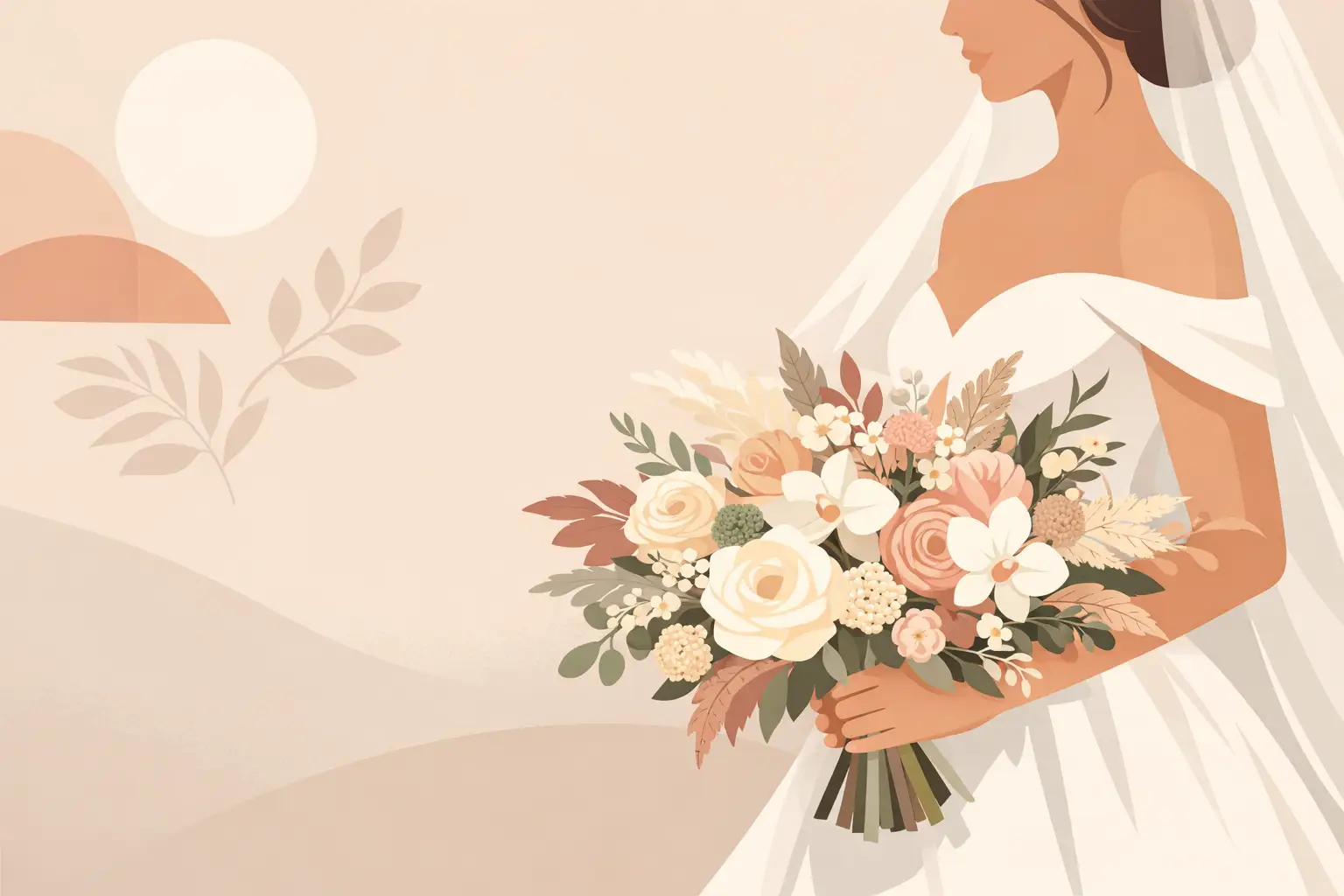
A bouquet need not be large or loudly coloured to feel memorable. Often, it is the small changes in surface, shape and movement that make people look twice: a curling tendril, a velvety leaf, the soft scatter of a flowering umbel, or one beautifully formed garden rose held among looser stems. This textured bridal bouquet inspiration is for couples drawn to flowers that feel gathered, personal and full of life rather than tightly arranged into a uniform dome.
Texture is not a passing wedding trend. It is the quality that gives seasonal flowers their character, particularly when British-grown blooms and garden materials are allowed to look like themselves. The result can be romantic, contemporary, quietly wild or wonderfully tailored. What matters is finding a balance that belongs with the setting, the season and the person carrying it.
What makes a bridal bouquet feel textured?
A textured bouquet combines flowers and foliage with contrasting forms. Some elements are rounded and full, others are airy or spired; some have a matt, papery finish, while others are glossy, ruffled or delicate. Rather than placing every stem at the same height, the florist creates gentle variation, allowing the eye to move through the design.
This does not mean a bouquet must look untamed. A refined bouquet can have plenty of texture while retaining a clear shape and a calm colour palette. Equally, a more meadow-like design still needs careful mechanics and considered proportions so that it holds beautifully throughout the day.
For a wedding in Derbyshire, texture can also create a natural conversation between the flowers and the landscape. A bouquet for a stone barn, a garden celebration or a country house may include airy seasonal ingredients that echo the setting without becoming overly rustic or themed.
Textured bridal bouquet inspiration by flower form
The most convincing designs layer different flower forms instead of relying on one bloom repeated many times. Choosing ingredients this way is useful when you know the feeling you want but do not yet know the names of particular flowers.
Soft focal flowers
These are the flowers that give a bouquet its heart. Garden roses, peonies in their brief season, dahlias, ranunculus and locally grown tulips can all offer generous petals and a lovely sense of softness. A focal flower does not have to be the largest stem in the bouquet, but it gives the arrangement somewhere to rest.
For a relaxed summer wedding, a few open garden roses among smaller flowers can feel more natural than a bouquet made entirely from roses. In autumn, dahlias bring depth and intricate petal structure without needing much else around them.
Airy, dancing details
Ammi, astrantia, nigella, scabious, cosmos and flowering herbs bring lightness between more solid blooms. Their smaller heads and fine stems stop the bouquet looking blocky. They are especially helpful for couples who want movement in photographs and a shape that feels as though it has just been gathered from a generous garden.
These lighter ingredients need thoughtful use. Too many can make a bouquet appear fussy or lose its outline, particularly in windy outdoor settings. A restrained scatter around stronger central flowers often has more impact.
Spires, seed heads and distinctive stems
Foxgloves, delphiniums, snapdragons, veronica and lupins add an upright line, while seed heads such as scabious pods or grasses introduce a more sculptural note. Their purpose is not simply to add height. They create rhythm and make a hand-tied bouquet feel less predictable from every angle.
Spired flowers are wonderful in spring and early summer, but they should relate to the bouquet’s scale. A petite bride may prefer just a few gentle vertical accents, while a larger, more dramatic arrangement can carry bolder lines.
Foliage with character
Foliage is not merely a green frame. Scented geranium, soft ferns, olive, ruscus, beech, herbs and seasonal branches each bring a different finish. Some designs need only the smallest amount of foliage, while others are made more expressive by leaves that trail, curl or reach beyond the flowers.
The best choice depends on the season and the overall look. Silver foliage may cool a blush and white palette; fresh green leaves can make it feel more garden-led. For a late-autumn wedding, turning leaves or rich berrying stems may offer texture and colour together.
Let the season do some of the design work
When a bouquet is designed around what is naturally flourishing, its texture tends to feel effortless. This is one reason British-grown flowers are so rewarding for weddings: they offer variety, freshness and a sense of place that imported blooms cannot always replicate.
Spring bouquets might pair tulips, ranunculus, narcissi, blossom and delicate muscari. They can be full of changing shapes without feeling heavy. Late spring and early summer bring sweet peas, peonies, campanula, foxgloves and scented herbs, allowing for a particularly soft, romantic style.
High summer is generous with cosmos, dahlias, phlox, scabious and wild-looking grasses. This is a lovely time for a looser silhouette, though hot weather means flower choice and careful conditioning matter. Autumn invites richer texture through dahlias, chrysanthemums, berries, seed heads and changing foliage. Winter bouquets can be just as layered, using hellebores, winter roses, evergreen foliage, branches and textural dried elements in moderation.
Being flexible about exact varieties is often the best route to a beautiful seasonal bouquet. A florist can work from your preferred colours, mood and key flowers, then choose the strongest stems available at the right moment. It avoids forcing a design with flowers that are out of season, less sustainable or simply not at their best.
Choose a shape before choosing every flower
The silhouette has as much influence on texture as the individual stems. A softly rounded bouquet suits many bridal looks and gives plenty of room for varied petals and airy accents. It feels classic, but can be made distinctly personal through colour, foliage and flower choice.
A looser garden-gathered shape has a little more reach at the edges, with stems moving in different directions. It works beautifully with flowing dresses, outdoor ceremonies and venues where nature already provides part of the atmosphere. The trade-off is that it needs confidence: a loose bouquet should look intentional, not accidental.
For a more contemporary dress, an asymmetrical bouquet can be striking. One side may carry a longer trail of foliage, grasses or orchids, while the other remains more compact. This shape is best when it reflects the wider styling rather than being introduced simply because it is fashionable.
The handle deserves consideration too. Exposed stems can suit a natural design and show off the ingredients, while a neat ribbon binding creates a more polished finish. Silk or velvet ribbon can add another quiet layer of texture, especially if it echoes the bridal outfit or the bridesmaids’ dresses.
Build colour through tone, not just contrast
Textured bouquets are often at their most elegant when the colour palette is edited. White, cream, pale green and soft butter tones can feel richly layered when the flowers themselves have different forms. Similarly, a palette of blush, apricot and faded terracotta can be more interesting than a larger range of unrelated colours.
That said, texture can support stronger colour too. Deep burgundy dahlias, plum scabious and chocolate cosmos gain depth when lifted with pale astrantia or a small amount of airy foliage. The key is to give each colour room to be seen.
Bring fabric swatches, photographs of your dress and a few images that show what you are drawn to. It is also helpful to say what you do not like. Perhaps you love loose movement but not pampas grass, or want seasonal foliage but nothing too rustic. These details give a florist a clearer starting point than a folder of identical bouquet images.
Make the bouquet part of the whole wedding
A bridal bouquet does not need to match every arrangement exactly, but it should feel connected to the day. Repeating a flower variety in buttonholes, ceremony vessels or table flowers creates a gentle thread without making the styling feel over-coordinated.
Consider the practical moments as well. If you are wearing a detailed dress, the bouquet may need a simpler outline so neither element competes. If you are having a small registry office ceremony followed by lunch, a smaller posy with exquisite seasonal ingredients can feel more fitting than a large trailing arrangement. For an outdoor celebration, resilient flowers and a considered collection plan are as valuable as the visual idea.
At Sweetpea Macfie, the most useful conversations begin with the atmosphere you want guests to feel, not a demand to recreate a photograph stem for stem. A bouquet can take its cue from a favourite garden, a meaningful season or the colours of a much-loved place, then become something entirely your own.
When you choose texture, allow a little room for nature’s variation. The curve of a stem, the opening of a bloom and the small surprises of the season are often the details that make a bridal bouquet feel less like an accessory and more like part of the memory.
 I’m Marie,
the florist behind Sweet Pea Macfie.
I began Sweet Pea Macfie in 2018 and am a qualified florist with over 13 years’ experience.
The name is an ode to my Grandad, John Macfie, who in his day was one of the best Sweet pea growers in the country. He exhibited at all the major flower shows, and his Chelsea Gold Medal is one of my most treasured possessions, so you could say that growing and arranging flowers is in my blood.
I’m Marie,
the florist behind Sweet Pea Macfie.
I began Sweet Pea Macfie in 2018 and am a qualified florist with over 13 years’ experience.
The name is an ode to my Grandad, John Macfie, who in his day was one of the best Sweet pea growers in the country. He exhibited at all the major flower shows, and his Chelsea Gold Medal is one of my most treasured possessions, so you could say that growing and arranging flowers is in my blood.