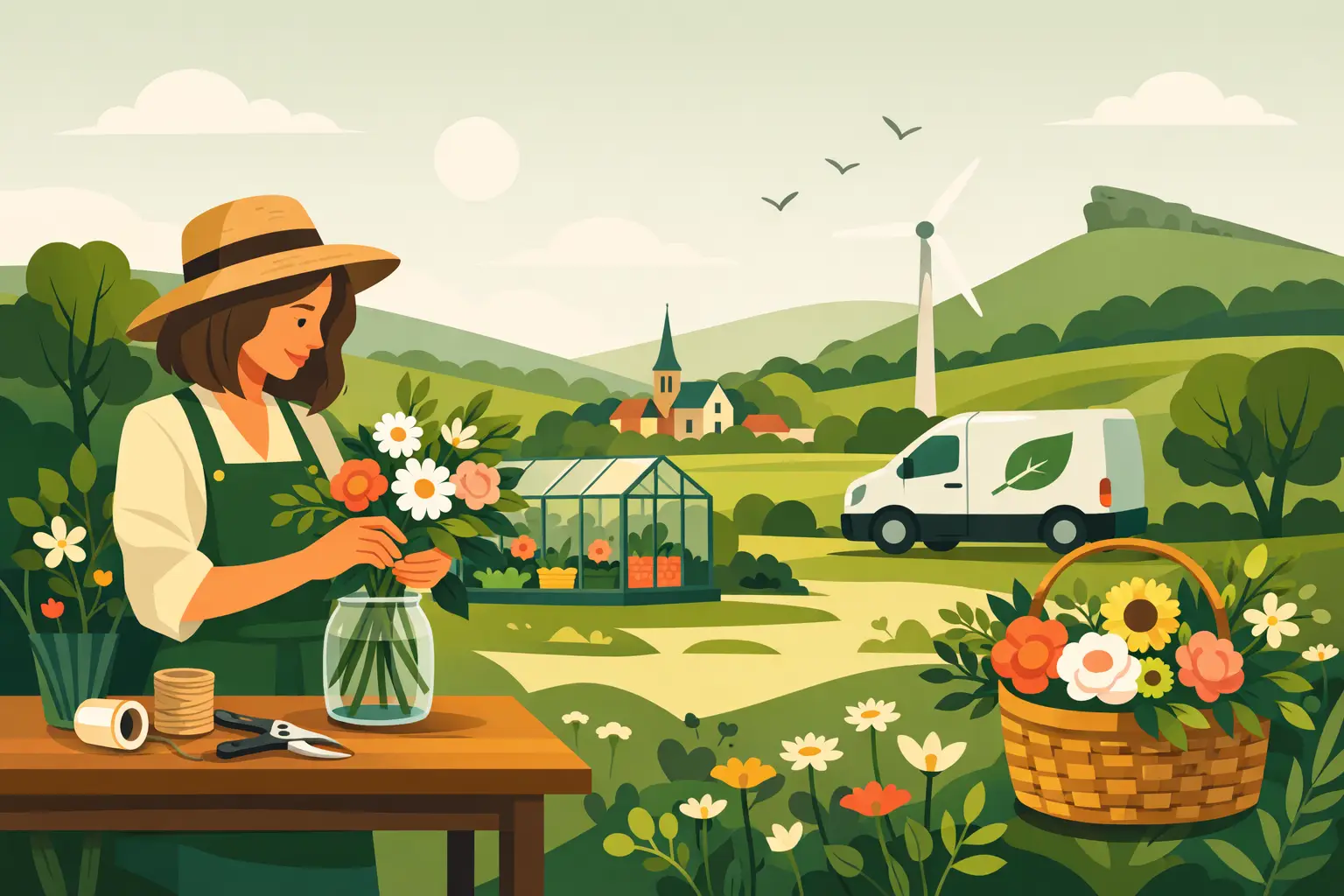
A bouquet can look beautifully natural and still carry a surprising environmental cost. Flowers may have travelled long distances, been grown under energy-intensive conditions or arrived wrapped in layers of plastic. A sustainable florist review should therefore look beyond a lovely photograph. It is about asking where the flowers came from, how they were arranged, what happens after the occasion and whether the design feels genuinely considered.
For weddings, farewells and meaningful gifts, these details matter because flowers are never simply decoration. They set a tone, carry a message and often become part of the memories people hold on to. Choosing with care need not mean compromising on beauty. In many cases, it leads to flowers with more character, movement and sense of place.
What makes a florist genuinely sustainable?
Sustainability in floristry is not one single promise or a badge applied to every stem. It is a series of practical choices, made from the point of sourcing through to delivery and disposal. No florist can grow every flower locally all year round, particularly when a client has their heart set on a specific bloom outside its natural British season. The more useful question is whether the florist is open about those choices and works thoughtfully within the limits of seasonality.
A florist with a strong sustainable approach will usually prioritise British-grown flowers when they are available. This supports local growers and avoids unnecessary air freight, while giving arrangements a freshness that is difficult to imitate. Spring may bring scented narcissi, tulips, blossom and ranunculus. Summer offers sweet peas, garden roses, cornflowers and cosmos. Autumn has dahlias, berries, grasses and richly toned foliage. Winter can be quieter, but branches, seed heads, evergreens and seasonal bulbs have their own restrained beauty.
Imported flowers are not automatically a poor choice. Some varieties are difficult to source in Britain, and there are moments when a particular flower has personal significance. A thoughtful florist can explain the options, suggest an appropriate seasonal alternative or use an imported stem carefully rather than building the entire design around it. That is a more honest approach than promising a fully local arrangement in February while quietly relying on flown-in summer flowers.
Ask about provenance, not just the country of origin
“British-grown” is a valuable starting point, but provenance goes further. It includes how regularly a florist buys direct from growers, whether they can tell you what is in season, and how they make choices when British flowers are not available. It also includes foliage. Garden material, locally grown foliage and carefully foraged ingredients can add texture, although responsible foraging means taking only what is plentiful and permitted.
A good conversation with your florist should feel reassuring rather than worthy. You do not need to arrive with a list of botanical questions. Simply explain what matters to you: perhaps minimal travel, plastic-free presentation, seasonal colour or a farewell tribute without floral foam. An experienced florist should be able to guide you with calm, practical advice.
A sustainable florist review should consider floral foam
Floral foam has long been used to hold stems in place, especially in funeral work and larger arrangements. It is convenient, but it is also single-use plastic that breaks down into microplastics. For many people, this is the point where sustainable floristry becomes most meaningful: a beautiful tribute or table arrangement should not create a lasting burden once the flowers have faded.
Foam-free design is possible in far more situations than people expect. Florists may use reusable vessels, chicken wire, pin frogs, moss, natural mechanics, water-filled containers or carefully structured arrangements to support stems. Each method has a different purpose, and some designs require more time and technical skill than foam-based work. That is part of the value of choosing a florist who understands construction as well as appearance.
There are trade-offs. A large installation, an unusual vessel or flowers in difficult conditions may call for a discussion about the most secure mechanics. The aim is not perfection at any cost, but reducing waste where possible without risking an arrangement that cannot safely do its job. For funeral flowers in particular, a florist should be able to talk sensitively about foam-free alternatives that remain appropriate, stable and personal.
Packaging and delivery tell part of the story
A sustainable bouquet does not need to arrive looking plain or unfinished. It can be beautifully presented in recyclable paper, reusable containers or minimal protective wrapping. The key is avoiding unnecessary layers: cellophane sleeves, plastic water packs, ribbons that cannot be reused and oversized branded packaging all add up.
Some packaging does have a practical role. A gift bouquet travelling across Derbyshire may need a water source or protection from cold weather, and delicate stems cannot always be sent out with nothing around them. A considerate florist weighs that need against waste, rather than treating plastic-free packaging as an absolute rule regardless of the flowers’ welfare.
Delivery also deserves a realistic view. Locally delivered flowers generally have a smaller footprint than those sent across the country, but consolidating deliveries, choosing seasonal ingredients and creating designs that last well can be just as significant. A bouquet that is enjoyed for a week is a better use of flowers than one that looks tired after two days.
Why seasonal flowers often feel more personal
Seasonality is sometimes mistaken for limitation. In practice, it gives flowers their emotional texture. The first scented sweet peas of summer feel special precisely because they are fleeting. A vase of locally grown dahlias has the generous, slightly wild quality of late August. Bare branches and winter foliage can be every bit as expressive as imported blooms when they are designed with confidence.
For couples planning a wedding, seasonal flowers can also make early decisions easier. Rather than choosing every variety from a limitless catalogue, begin with the mood you want to create: soft and gathered, meadow-like, sculptural, romantic or quietly elegant. Your florist can then build a palette around what will be at its best on the date.
For sympathy flowers, seasonality brings gentleness rather than spectacle. A natural spray of spring blossom, garden foliage and scented flowers may say more than an elaborate design that feels unrelated to the person being remembered. The right tribute is not necessarily the largest one. It is the one that feels true.
How to choose without becoming overwhelmed
The most useful sustainable florist review is ultimately a conversation. Look for a florist whose work has a recognisable point of view but who listens carefully to yours. Their portfolio should show variety in colour, scale and occasion, while still feeling natural and well made. Ask how they source flowers, whether they use floral foam, what happens to packaging and how they approach requests for out-of-season blooms.
You can also pay attention to the language used. Vague claims about being “eco-friendly” are less helpful than clear explanations of British flower sourcing, seasonal availability, reusable mechanics and reduced packaging. Equally, a florist should not make you feel guilty for wanting roses in November or a particular flower for sentimental reasons. Good guidance is about finding a thoughtful route forward.
At Sweetpea Macfie, this means beginning with the occasion and the feeling you would like the flowers to hold, then designing with the best of the season wherever possible. British-grown flowers, foam-free methods and minimal packaging are not treated as an afterthought. They are part of creating arrangements that feel generous, individual and right for the moment.
The loveliest flowers are often those that could only have been made then: shaped by the season, the garden, the person receiving them and the care taken in choosing every stem.
 I’m Marie,
the florist behind Sweet Pea Macfie.
I began Sweet Pea Macfie in 2018 and am a qualified florist with over 13 years’ experience.
The name is an ode to my Grandad, John Macfie, who in his day was one of the best Sweet pea growers in the country. He exhibited at all the major flower shows, and his Chelsea Gold Medal is one of my most treasured possessions, so you could say that growing and arranging flowers is in my blood.
I’m Marie,
the florist behind Sweet Pea Macfie.
I began Sweet Pea Macfie in 2018 and am a qualified florist with over 13 years’ experience.
The name is an ode to my Grandad, John Macfie, who in his day was one of the best Sweet pea growers in the country. He exhibited at all the major flower shows, and his Chelsea Gold Medal is one of my most treasured possessions, so you could say that growing and arranging flowers is in my blood.